The area now known as the University District was originally called Brooklyn by real estate developers in the 1890s, a nod to its position across the water from downtown Seattle. When the University of Washington relocated to its current campus in 1895, the neighborhood began its transformation. The 1909 Alaska-Yukon-Pacific Exposition, hosted on the UW campus, accelerated development and left behind some of the most beautiful architecture in Seattle, much of it still standing today with Mount Rainier framed deliberately in the sightlines. The name Brooklyn faded, University District was adopted after a public contest in 1919, and the Ave became what it remains today, one of Seattle's most enduring and eclectic commercial streets.
The U District sits in a genuinely useful location, bordered by Ravenna to the north, Eastlake to the south, and connected to Capitol Hill, downtown, and the Eastside by light rail. It is one of the most transit-connected residential neighborhoods in Seattle outside the dense core.
The housing stock is a mix of apartments, condos, and older single family homes on the residential streets north of campus. The neighborhood attracts young professionals, medical professionals, and biotech workers who want proximity to the UW Medical Center and easy transit access to the rest of the city. The Burke-Gilman Trail runs directly through the neighborhood, connecting cyclists and walkers to Ballard, Fremont, and the broader trail network. University Village, one of Seattle's best outdoor shopping centers, sits right on the neighborhood's edge and handles most everyday needs with ease.
The Ave, University Way NE, has been the neighborhood's commercial spine for over a century, lined with an eclectic mix of bookstores, coffee shops, international restaurants, and independent businesses that give the U District a density and variety few neighborhoods can match. The international food scene here is genuinely exceptional, reflecting the global character of the university community.
The U District Farmers Market runs year round on Saturdays, and one of its most distinctive features is produce grown by local school programs, connecting kids to the food system in a way that shows up on the table every weekend. It is the kind of detail that makes the neighborhood feel like a real community rather than just a student corridor.
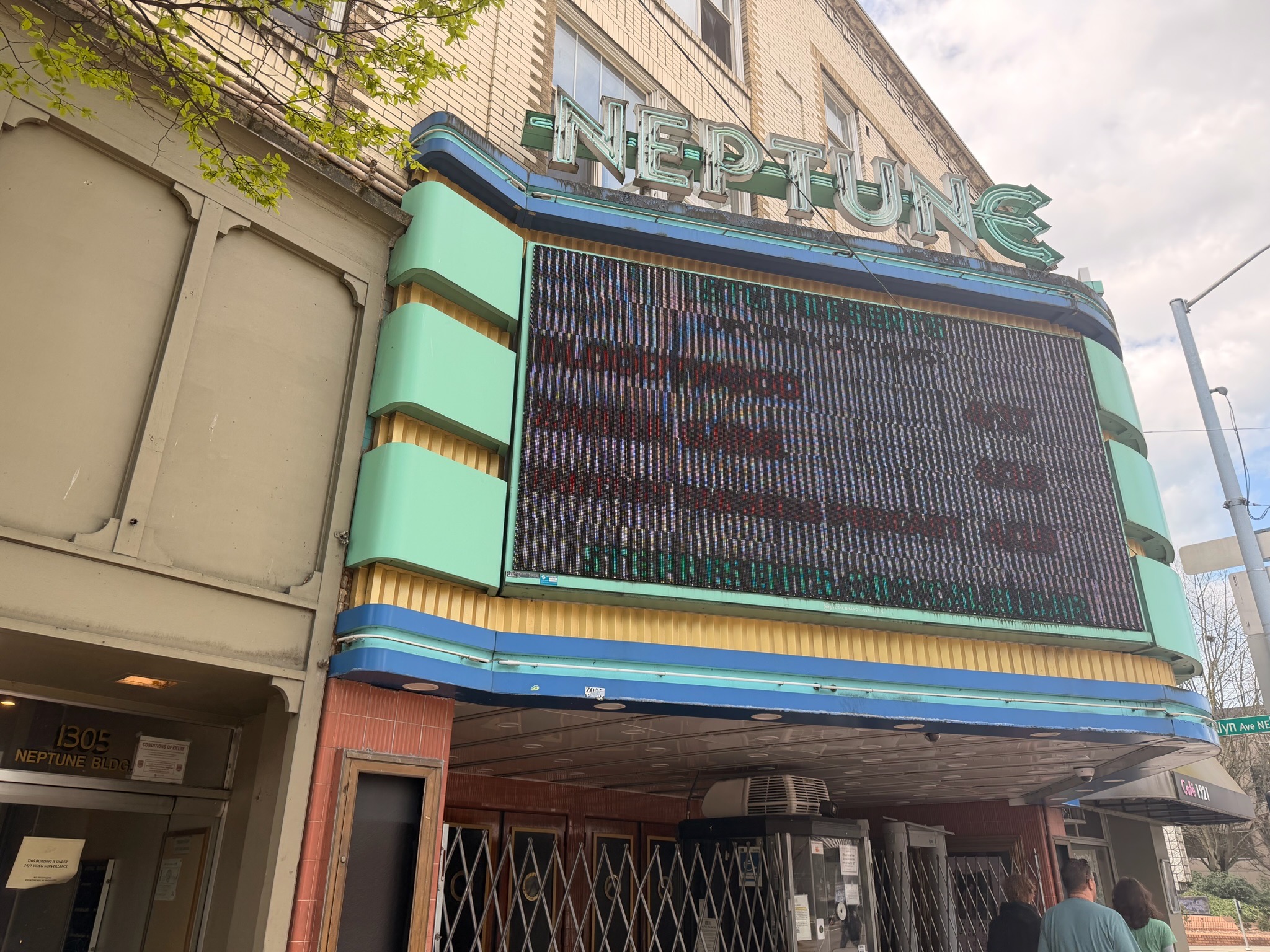
The Neptune Theatre, built in 1921, is one of Seattle's most beloved historic venues, booking live music and performance in a beautifully preserved space that has been part of the neighborhood's cultural life for over a hundred years. Before a show, the Graduate Seattle rooftop bar is the move. An Art Deco hotel from 1931 with corner windows in every room, the rooftop looks directly into the downtown skyline and across the UW campus. A perfect prefunk and genuinely one of the better views in the city.
The Burke Museum of Natural History and Culture and the Henry Art Gallery both sit on the UW campus and are open to the public, adding a world-class cultural dimension to daily life in the neighborhood.
The U District consistently attracts people who want transit, walkability, and cultural density without paying Capitol Hill prices. Once they land here, they tend to stay longer than they planned.
Din Tai Fung at University Village is one of those restaurants I find myself recommending to absolutely everyone. The Taiwan-born chain has earned its global reputation one xiaolongbao at a time, and the Seattle location is no exception. The soup dumplings are as close to perfect as dumplings get, the cucumber salad is quietly one of the best things on the menu, and the whole experience manages to feel both special and completely approachable. Go for lunch, skip the weekend dinner wait, and order more than you think you need.
These are buildings I know well and would feel comfortable recommending to a client, whether you're renting or buying.