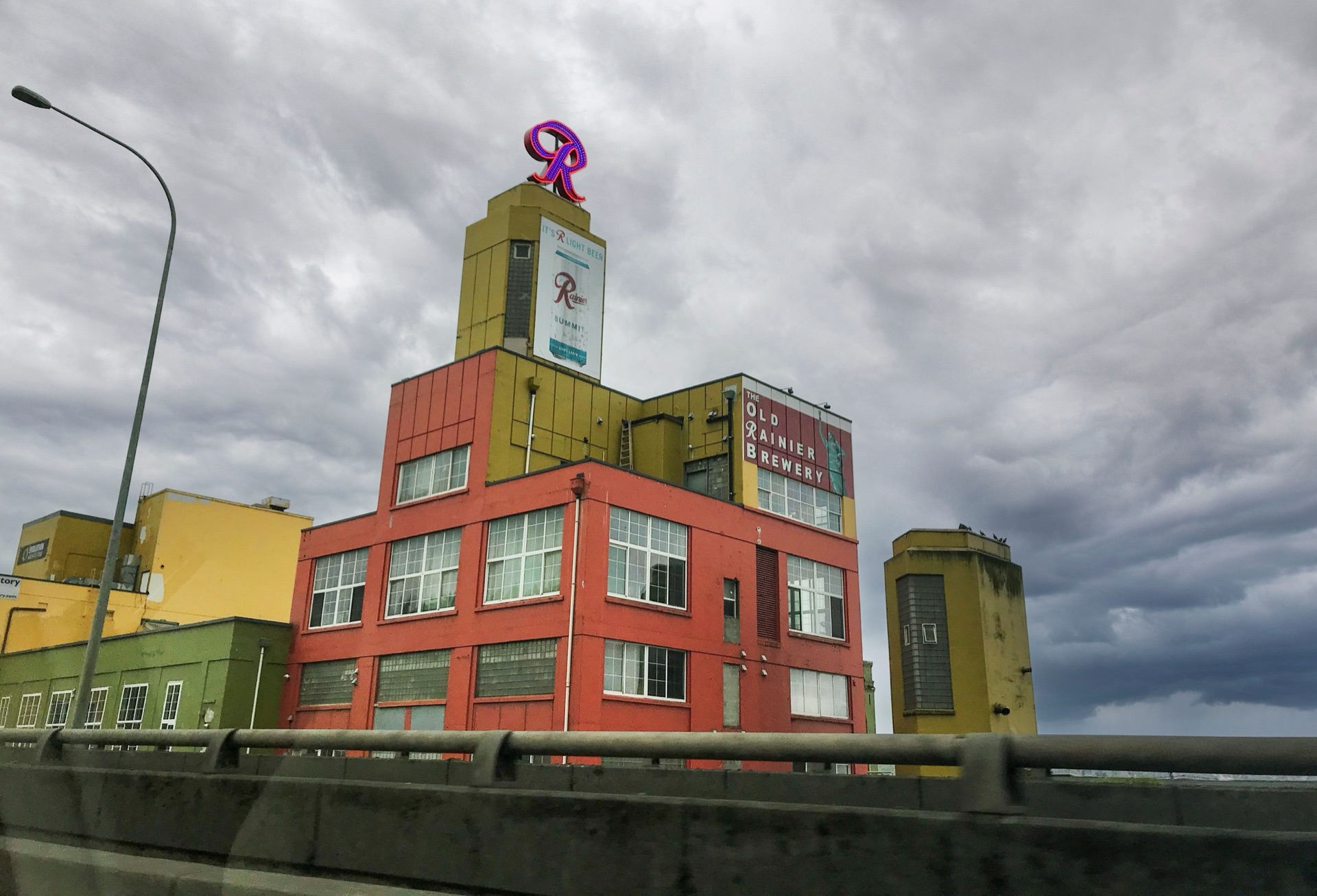
Georgetown is arguably Seattle's oldest neighborhood, and it has always done things its own way. The first settlers arrived along the Duwamish River in 1851, farming the fertile bottomland and supplying lumber to a growing city. By the 1890s Georgetown had become an industrial powerhouse, home to the Seattle Brewing and Malting Company, which by 1904 had grown into the largest brewery west of the Mississippi. When Seattle began encroaching and its dry zone threatened to shut down Georgetown's saloons and brewery, the neighborhood had a characteristically independent response. It incorporated as its own city in 1904, with the brewery superintendent as its first mayor, and financed itself by taxing saloons, pool halls, and games of chance. It ran wide open for six years before the cost of running a municipality got the better of it, and in 1910 Georgetown was finally annexed into Seattle. The red R you can see from I-5 is what remains of that legacy.
Georgetown is primarily a neighborhood of single family homes and newer townhomes. You won't find the high-rise apartments or large condo communities you'd see in neighborhoods closer to the core, and that is part of its appeal. It attracts people who want space, character, and a genuine neighborhood feel without paying Capitol Hill or South Lake Union prices.
The streets have an industrial-meets-residential quality that takes a minute to understand and then becomes completely addictive. Warehouses sit next to bungalows. Art galleries share blocks with fabrication shops. It is a neighborhood that rewards curiosity and punishes anyone looking for something predictable.
The historic Rainier Brewery buildings still stand today, landmarked and reimagined as creative office spaces, artist lofts, and small businesses. That brewing history feels alive in Georgetown in a new way too. The neighborhood has become a hub for Washington wineries with tasting rooms clustered throughout, making it one of the best places in Seattle to spend a Saturday afternoon working your way through local pours. One standout is Sleight of Hand Cellars, named after a Pearl Jam song and known for hosting live music regularly. It perfectly captures the creative, music-forward spirit that runs through Georgetown.
The Georgetown Carnival is the neighborhood's signature annual event, a street festival with local vendors, music, and a community energy that reflects exactly what makes this place tick.
Georgetown is one of those neighborhoods where people arrive thinking it is a stepping stone and end up staying for years. Once it gets under your skin it is hard to leave.
There is nowhere else in Seattle quite like The Corson Building. Tucked behind a wisteria-and-rose-covered wrought iron fence in the middle of Georgetown's industrial grit, this historic Italianate cottage from around 1910 is equal parts restaurant, garden, and community gathering place.
Chef Emily Crawford Dann serves a seasonal farm to table menu, communal seating on weekends with a prix fixe that changes based on what is fresh and available. Trains rumble past occasionally. Small planes fly overhead. And inside it is completely, unexpectedly magical. It is one of those places that makes you feel like you have found a secret, and once you have been, you will want to bring everyone you know.
Georgetown's real estate is almost entirely single family homes and newer townhomes. Inventory is limited and when good properties come up they tend to move quickly. If you are considering Georgetown I would love to help you understand the micro-locations within the neighborhood, what is currently available, and how it compares to nearby neighborhoods like SODO, Beacon Hill, and Columbia City.