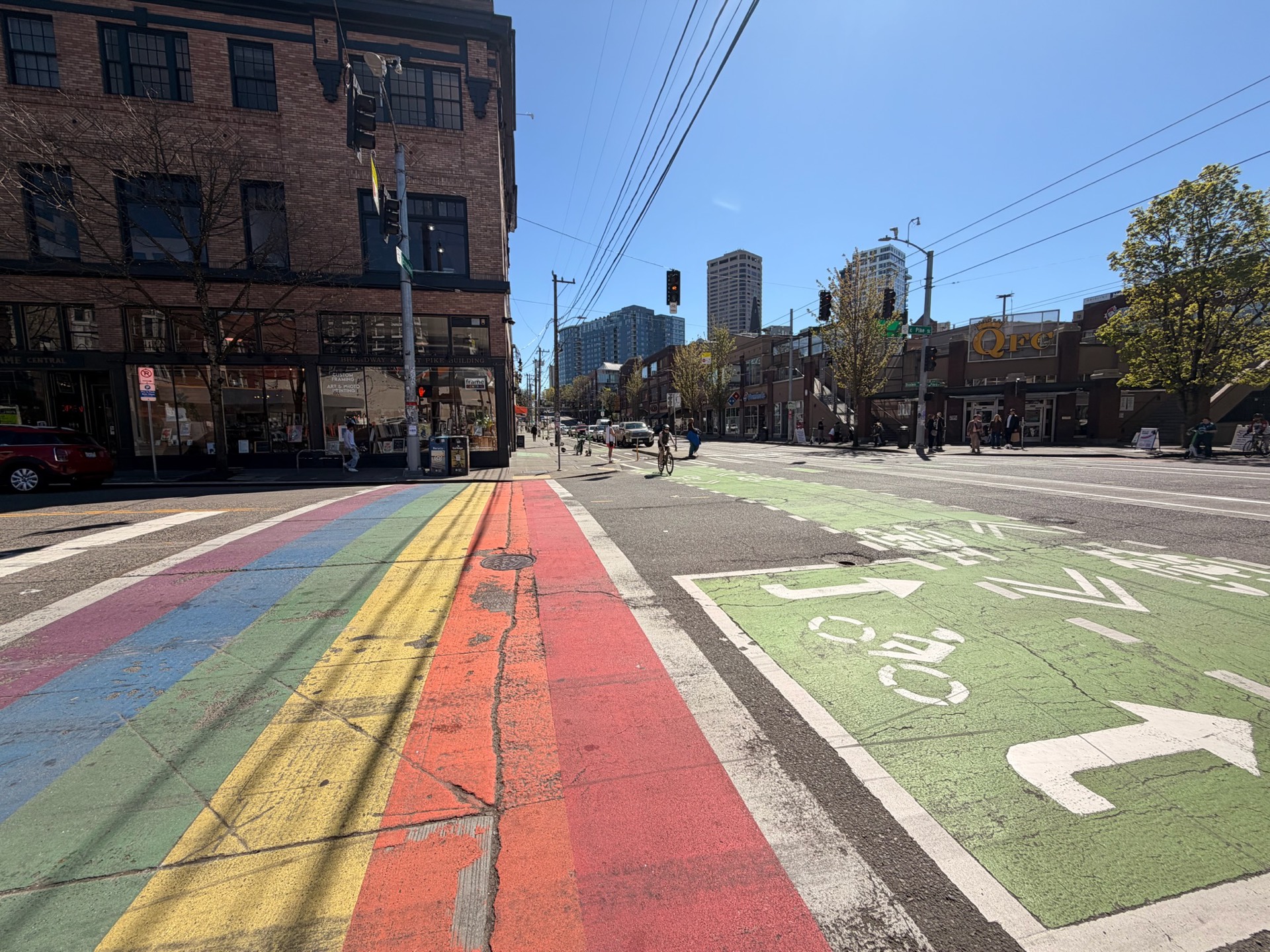
Walk down Pike or Pine Street today and you are walking through the remnants of Seattle's original Auto Row. In the 1910s and 1920s these wide streets were lined with car showrooms, service stations, and garages built from heavy brick and concrete designed to showcase the latest Model Ts. When the car dealers left and wealthier residents moved to the suburbs, rents dropped and something more interesting moved in.
By the 1960s and 70s, Seattle's LGBTQ community had begun migrating from Pioneer Square up to Capitol Hill, establishing bars, safe spaces, and advocacy organizations that would shape the neighborhood's identity for decades. The Pike/Pine Conservation Overlay, which encourages developers to preserve the facades of those original auto garage buildings, is why so many of Capitol Hill's modern condos rise from brick shells that date back a hundred years. The neighborhood remembers where it came from. That history is visible on every block.
Capitol Hill has long been the heart of Seattle's creative and LGBTQ+ community, and that identity is still very much present today. It is the most densely populated neighborhood in Seattle, and you feel every bit of it.
Broadway is the main corridor, lined with restaurants, bars, and the rhythm of daily life. Running perpendicular, the Pike/Pine corridor is where much of the nightlife lives, clubs, music venues, and late night spots that keep the neighborhood active well into the evening. From there the neighborhood branches out into quieter residential streets, so the experience varies considerably depending on exactly where you land.
You will find everything from modern apartment buildings and newer townhomes to older brick buildings with real character and boutique condos tucked into quieter pockets. It is one of the most walkable neighborhoods in Seattle, where daily life can easily happen without a car. Light rail runs through the neighborhood, making downtown, the airport, and with the East Link extension, the Eastside, all genuinely easy to reach.
Capitol Hill also played a major role in shaping Seattle's artisanal coffee culture, and that influence is still everywhere. From longtime institutions like Caffe Vivace to newer design-forward spaces, this is a neighborhood that takes its coffee seriously.
Capitol Hill has the highest density of small businesses in Seattle, and you feel it immediately walking through the neighborhood. Independent shops, creative spaces, and restaurants that couldn't exist anywhere else. There is always something going on.
Volunteer Park and Cal Anderson Park are the neighborhood's two great outdoor anchors. Volunteer Park sits at the top of the hill with sweeping city views, a water tower you can climb, and the Seattle Asian Art Museum tucked inside. Cal Anderson is the neighborhood's living room, a gathering place for pickup soccer, summer afternoons, and some of the best people watching in Seattle.
The music and art scene here is genuine and deep. Chop Suey and Neumos have been booking serious shows for years. The neighborhood's gallery scene, independent theaters, and creative spaces keep Capitol Hill feeling like a place where culture is actually being made rather than just consumed. The chef scene reflects that same ambition. Some of Seattle's most celebrated restaurants are here, and the concentration of serious food within walking distance is genuinely hard to match anywhere else in the city.
Did you know that both Macklemore and Sir Mix-A-Lot filmed music videos at Dick's Drive-In on Broadway? It's one of those small details that captures exactly what Capitol Hill is. Iconic and a little irreverent at the same time.
Once people land on Capitol Hill, the energy tends to get under their skin quickly. It's the kind of neighborhood that's hard to leave once you've settled in.
Life on Mars is one of my favorite spots on Capitol Hill and a great example of the neighborhood's personality. It's part-owned by a DJ from KEXP, which you can feel the second you walk in.
The menu is completely vegan, but even meat eaters love it — the comfort food is that good. They also have an incredible record collection that you can actually browse and play, which adds to the whole experience.
It has that cool, slightly unexpected, music-forward vibe that Capitol Hill does so well.
These are buildings I know well and would feel comfortable recommending to a client, whether you're renting or buying.