Ballard or Capitol Hill? A Seattle Neighborhood Comparison
This is the neighborhood comparison I field more than any other from relocating buyers. Both are walkable, both are full of independent restaurants and coffee shops, and both are a reasonable distance from downtown. The day-to-day feel is genuinely different, though, and the price gap is smaller than most people expect.
Key Takeaways
Over the trailing 90 days, Ballard's median sale price is $899,000 with a median of 57 days on market. Capitol Hill is $870,000 with 48 days. Ballard is the more expensive and slower-moving of the two, which surprises most buyers.
Ballard's identity is built around the Hiram M. Chittenden Locks, Golden Gardens, and a walkable commercial strip of breweries, cafés, and seafood restaurants.
Capitol Hill has Link light rail and Ballard does not, which is the single biggest practical difference for anyone commuting to downtown, the University District, or the Eastside.
Capitol Hill holds a dense concentration of live music venues, bars, and late-night dining along Pike/Pine, plus Volunteer Park and Cal Anderson Park.
Because the medians are close, the decision usually comes down to how you want to spend your time rather than what you can afford.
What Ballard Is Like
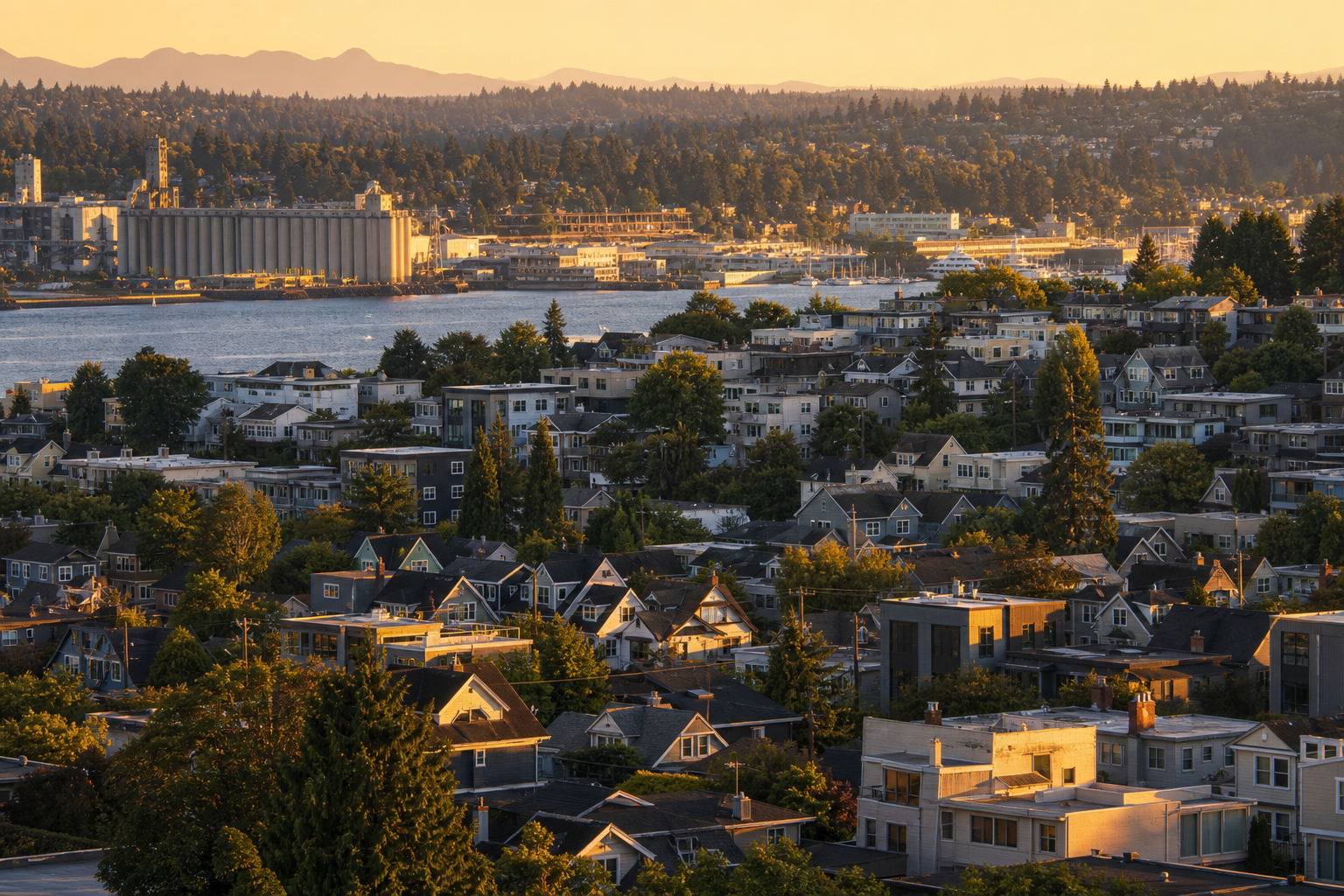
Ballard's character is rooted in its maritime history, and that identity is still very much alive. The Hiram M. Chittenden Locks sit at the western edge, where you can watch boats move between Lake Union and Puget Sound and walk through the Carl S. English Jr. Botanical Garden. Golden Gardens adds beach access, forest trails, and wildlife viewing, which is genuinely rare for a dense urban neighborhood.
The commercial strip along Ballard Avenue and Market Street is neighborhood-oriented in the best sense. Wood-fired pizza at Serious Pie, Pacific Northwest seafood at Ray's, Lebanese-Mexican tacos at Situ Tacos, Caribbean sandwiches at Un Bien, and a strong brewery culture anchored by places like Urban Family. The rhythm leans toward Sunday farmers markets, afternoon brewery visits, and sunset at Golden Gardens more than late-night bar-hopping.
The commute is the thing to weigh. Ballard has no Link station and won't until the Ballard extension, which is currently targeted for as soon as 2042 and conditional on funding milestones. Bus service is solid and the neighborhood works well for people whose daily routine runs west or northwest, but driving is the most common way people get to work from here.
What Capitol Hill Is Like
Capitol Hill runs on different energy. The Pike/Pine corridor holds one of the densest concentrations of bars, live music venues, and late-night restaurants in the city, including rooms like Neumos, and the neighborhood has long been a center of Seattle's LGBTQ+ nightlife and cultural institutions. If you want somewhere that's active on a Tuesday night, this is it.
The green space is excellent too. Volunteer Park covers roughly 48 acres and includes the Seattle Asian Art Museum and the Volunteer Park Conservatory. Cal Anderson Park sits closer to the Pike/Pine core and hosts community events year-round. The dining along Pike/Pine, from Taurus Ox to Hula Hula to Rumba, is internationally influenced and dense enough that you could eat somewhere new every week for months.
Capitol Hill station serves both the 1 Line and the 2 Line, which puts downtown minutes away and gives direct rail access to the University District, Northgate, Sea-Tac, and, since the Crosslake Connection opened in March, Bellevue and Redmond. The First Hill Streetcar adds a connection toward First Hill and the International District. For a car-light household, that's a substantial advantage over Ballard.
Price and Pace
| Area | Median Sale Price | Median Days on Market |
|---|---|---|
| Ballard | $899,000 | 57 |
| Beacon Hill | $770,000 | 52 |
| Belltown | $484,999 | 41 |
| Capitol Hill | $870,000 | 48 |
| Central District | $792,000 | 48 |
| Columbia City | $724,950 | 55 |
| Denny Triangle | $650,000 | 41 |
| Downtown Seattle | $747,625 | 51 |
| Georgetown | $549,950 | 25 |
These are area-level medians over the trailing 90 days. An individual home's value depends on condition, street, build year, and timing, so the median is a starting point rather than a price guarantee.
The comparison runs opposite to what most buyers assume. Ballard carries the higher median and the longer time on market, and Ballard is the slowest-moving neighborhood in this whole set at 57 days. Part of that is property mix, since Ballard skews more toward single-family and townhomes while Capitol Hill blends houses with a deep condo and townhome inventory. But the practical takeaway for a buyer is that Ballard is not the budget alternative to Capitol Hill, and the extra time on market there may give you more room to negotiate than you'd expect.
What I tell every buyer: the specific blocks matter as much as the neighborhood median. A south-facing craftsman two blocks off Ballard Avenue and a newer condo on 15th Avenue East are both "in the neighborhood" and they're completely different purchases.
Which One Fits
When I walk a client through this decision, it usually comes down to two questions. How late do you want your neighborhood to be alive, and how much does rail access matter to your daily routine?
Ballard tends to fit people who want beach and waterfront woven into ordinary life, who prefer a neighborhood dining and brewery scene to a late-night entertainment corridor, whose work or routine runs west or northwest, and who want a place with its own distinct identity rather than a dense urban grid. It also requires being honest with yourself about driving.
Capitol Hill tends to fit people who want nightlife, live music, and a dense walkable grid, who need direct rail to downtown, the U District, or the Eastside, and who want to be within reach of First Hill and the Central District. The tradeoff is noise and density, which some people love and some people tire of.
Neither answer is universal. I've placed buyers who were certain they were Capitol Hill people in Ballard and watched them love it, and the reverse. The only reliable way to know is to spend time in both at different hours and talk through what your actual week looks like.
If you're deciding remotely, that conversation is worth having before you book a trip, so you're touring with a shortlist instead of a map.
Frequently Asked Questions
Which is more affordable, Ballard or Capitol Hill?
Capitol Hill, slightly. Over the trailing 90 days Capitol Hill's median is $870,000 against Ballard's $899,000. The gap is small enough that it shouldn't drive the decision on its own, and the property mix differs between them, so compare like to like rather than median to median.
Which is more walkable?
Both are walkable by Seattle standards. Capitol Hill has the denser grid and more amenities per block, plus Link service, which gives it the edge for car-light living. Ballard's walkability is strong within the neighborhood, with most daily needs along Market Street and Ballard Avenue, but getting out of the neighborhood without a car takes longer.
Which has better nightlife and restaurants?
Capitol Hill if nightlife is the priority, since Pike/Pine concentrates live music, bars, and late dining in a compact area. Ballard's food and drink scene is excellent and arguably more distinctive, built around breweries, seafood, and independent restaurants, but it runs on an earlier, more neighborhood-centered rhythm.
Which has better outdoor access?
Ballard, clearly. Golden Gardens offers beach, forest trails, and wildlife viewing, and the Locks add something no other Seattle neighborhood has. Volunteer Park and Cal Anderson are excellent urban parks, but neither includes waterfront.
Which is better for commuting downtown or to UW?
Capitol Hill. It sits between the two geographically and has a Link station serving both the 1 Line and 2 Line. Ballard has no rail and is farther northwest, so most commuters there are driving or riding the bus.
How much does the lack of light rail matter in Ballard?
It depends entirely on your routine. If you drive to work or work from home, it matters little, and Ballard has frequent bus service. If you want to live without a car or commute daily to downtown, the U District, or the Eastside, it's the most consequential difference between these two neighborhoods, and it won't change for a long time.
About Kim Reidy
Kim Reidy is a Senior Broker and Director of Relocation at Pointe3 Real Estate in Seattle who has been helping corporate transferees and individuals find the right neighborhood since 2010. A Certified Negotiation Expert (CNE) and Certified Buyer Agent Expert (CBAE), she's known as Seattle's "neighborhood whisperer."
Pointe3 Real Estate · (206) 237-6391
Equal Housing Opportunity. Kim Reidy is licensed in Washington State, regulated by the Washington State Department of Licensing. Market data reflects trailing 90-day activity and changes continuously. Property search powered by RealScout pulling live MLS data; all information should be independently reviewed and verified for accuracy.