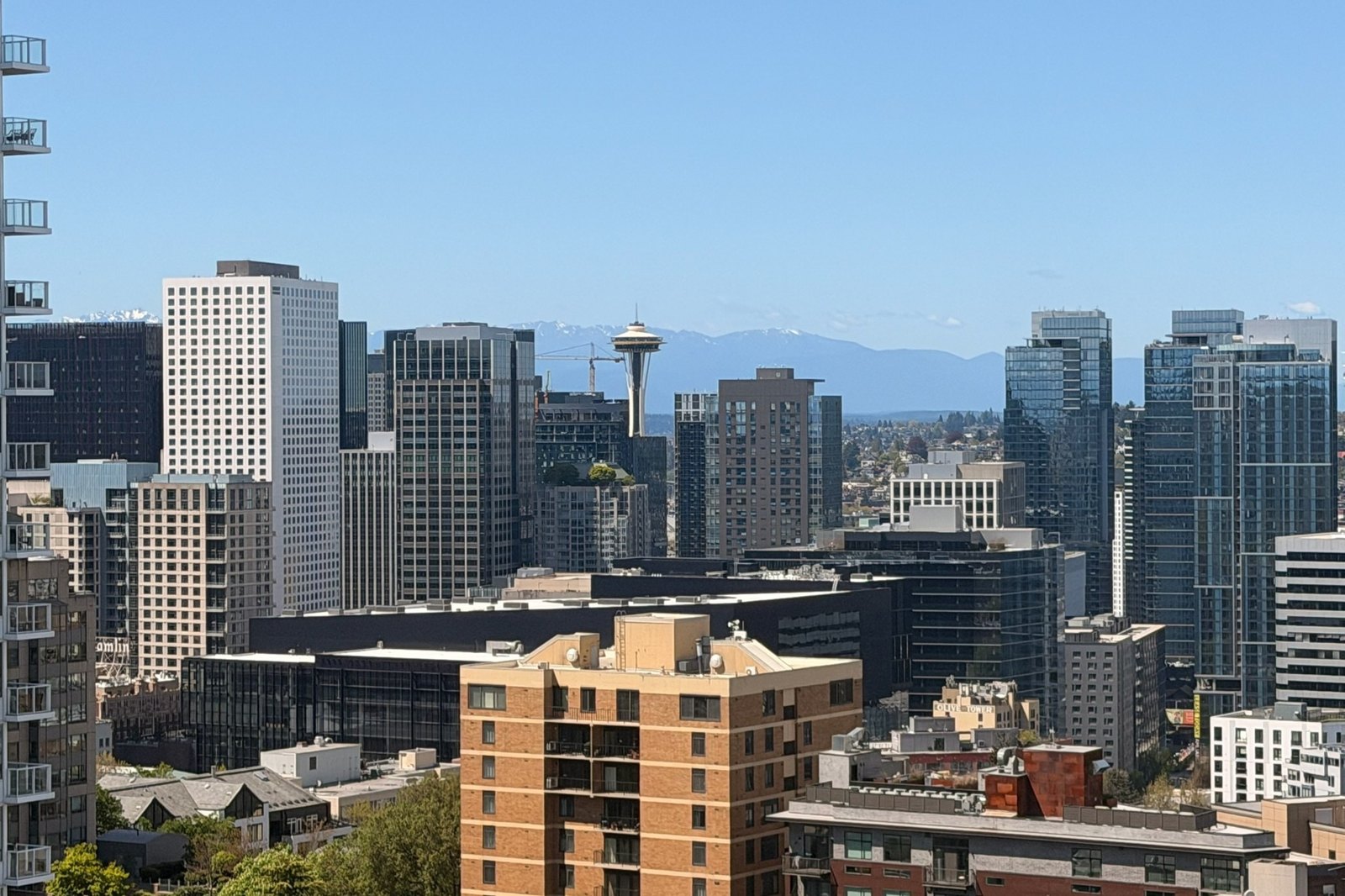
Corporate transferees relocating to Seattle should weigh commute distance, transit access, housing type, and price point before choosing a neighborhood. Seattle's central areas like Capitol Hill, South Lake Union, and Ballard each offer distinct trade-offs between walkability, space, and cost that matter most when you're moving on a tight timeline.
What should corporate transferees know before choosing a Seattle neighborhood?
The right Seattle neighborhood for a corporate transferee depends on where you work, how you want to get there, and what kind of home you actually need. Seattle's core neighborhoods are competitive, with median sale prices ranging from the mid $400,000s in Belltown to near $900,000 in Ballard, and pace varying from about six weeks to two months depending on the neighborhood. Getting clear on your priorities before you tour a single property will save you weeks of backtracking.
Key Takeaways
- King County's median sale price was $879,500 in July 2026, according to Axios Seattle, reflecting a market that is essentially flat year over year.
- Ballard's median sale price is $899,000 with a median of 57 days on market, while Columbia City sits at $724,950 with a 55-day median.
- The fastest-moving neighborhoods are the condo-dense ones, Belltown and Denny Triangle, both at 41 days, while single-family areas run closer to two months.
- Washington state uses escrow officers to handle closings, not attorneys, so your transaction timeline and paperwork will look different from what many out-of-state transferees expect.
- Renting first is a legitimate strategy in Seattle if your timeline is compressed, but buyers who arrive pre-approved and neighborhood-ready move faster when the right listing appears.
How do Seattle's neighborhoods compare for corporate transferees on commute and price?
This is the first question I ask every transferee who calls me: where is your office, and how do you want to get there? Everything else flows from that answer.
Seattle's geography is not forgiving. Hills, water, and bridges create real commute bottlenecks that don't show up on a map until you've sat in them. A neighborhood that looks close on paper can add 40 minutes to your morning depending on your mode of transit and your office location.
Here's a look at current market conditions across the neighborhoods I work with most often for relocation clients. These are aggregated figures from trailing 90-day public listing data as of August 2026. Individual home values vary by condition, street, and timing.
| Area | Median Sale Price | Median Days on Market |
|---|---|---|
| Ballard | $899,000 | 57 |
| Beacon Hill | $770,000 | 52 |
| Belltown | $484,999 | 41 |
| Capitol Hill | $870,000 | 48 |
| Central District | $792,000 | 48 |
| Columbia City | $724,950 | 55 |
| Denny Triangle | $650,000 | 41 |
| Downtown Seattle | $747,625 | 51 |
According to Axios Seattle's August 2026 housing update, King County's median sale price was $879,500 in July 2026, essentially flat year over year. That stability is meaningful context for transferees arriving with a budget set months ago: you're not walking into a runaway market, but you're also not finding bargains in the central neighborhoods.
One pattern worth reading off that table before we go neighborhood by neighborhood. The condo-heavy core, Belltown and Denny Triangle, turns over fastest at 41 days. The single-family neighborhoods, Ballard and Columbia City, are running closer to two months. For a transferee flying in for a weekend of touring, that difference is the whole ballgame: it tells you where you can afford to think and where you can't.
Core-adjacent neighborhoods: Belltown, Denny Triangle, and South Lake Union
If your office is in the downtown core, South Lake Union, or the waterfront, these neighborhoods put you within walking distance or a short bus ride. Belltown's median of $484,999 reflects a condo-heavy inventory, and it's worth knowing that in a high-density neighborhood, the building matters as much as the unit itself. HOA health, noise levels, floor plan, and views can swing value dramatically between two units in the same building. I walk every condo-focused client through building financials before we write an offer.
Denny Triangle sits between downtown and South Lake Union and has been attracting tech-adjacent buyers who want proximity to Amazon's campus without paying downtown prices. At a $650,000 median, it's one of the more accessible entry points near the core. It's also one of the two fastest-moving neighborhoods in this group at 41 days, so if it's on your list, be ready to decide.
Established neighborhoods with strong transit corridors: Capitol Hill, Ballard, and Fremont
Capitol Hill is one of Seattle's most walkable neighborhoods and sits directly on the Sound Transit Link Light Rail 1 Line, making it genuinely car-optional for commuters heading downtown or to the University District. At an $870,000 median and 48 days on market, it's priced accordingly but not the most expensive option here.
Ballard draws transferees who want a neighborhood feel with real grocery stores, restaurants, and weekend life within walking distance. At $899,000 median with 57 days on market, it's the slowest-moving neighborhood in this group, which gives out-of-state buyers genuine breathing room. The trade-off is the commute. Ballard has no light rail station, and under Sound Transit's May 2026 plan the segment reaching Ballard is not currently funded, with a best case around 2042 and a fallback near 2060. Bus service is solid, but if you're driving downtown at 8 a.m., budget the time honestly, and don't price in a train.
Fremont sits between Ballard and South Lake Union and appeals to transferees who want a shorter drive to tech campuses with a slightly lower entry price than Capitol Hill. It doesn't have its own light rail stop, so transit-dependent commuters should map their specific route before committing.
Value-oriented neighborhoods with good access: Beacon Hill, Columbia City, and the Central District
Beacon Hill has a light rail station on the 1 Line and a $770,000 median, making it one of the stronger value plays for transit-dependent professionals, and at 52 days it moves at a manageable pace.
Columbia City, at $724,950 with a 55-day median, also sits on the 1 Line and offers a genuine neighborhood commercial district. The pace here gives you time to evaluate, which is not true everywhere in this city.
The Central District at $792,000 median with 48 days on market sits close to Capitol Hill and First Hill, which makes it appealing for healthcare and biotech workers whose campuses cluster in that corridor.
What factors beyond price should a relocating professional consider?
Price and commute are the starting point, not the whole picture. Here's what I walk every relocation client through before we narrow the neighborhood list.
Transit access and walkability
If you want to live car-free or car-light in Seattle, your neighborhood choice matters more than any individual listing. The Link Light Rail 1 Line runs through Capitol Hill, Beacon Hill, Columbia City, and the University District. The King County Metro bus network fills in coverage across Ballard, Fremont, Wallingford, and West Seattle, but frequency and reliability vary by route. Check the actual route map for your office address, not just the neighborhood's general reputation.
Walk Score and transit scores are a useful starting screen, but they don't tell you whether the specific blocks near a listing are pleasant to walk at 7 a.m. in November. That's local knowledge, and it's one of the things I bring to every neighborhood tour.
Housing type and what your relocation budget actually buys
Seattle's central neighborhoods are predominantly condos and townhomes at the lower price tiers, with single-family homes commanding a significant premium. If your relocation package or budget is fixed, be honest about what that number buys in each neighborhood. A $700,000 budget in Belltown gets you a well-appointed condo. That same budget in Beacon Hill or Columbia City may get you closer to a single-family home with a yard. Neither answer is wrong, but they're different lives.
A July 2026 Zillow snapshot showed a Seattle median list price of $741,633 alongside a median sale price of $859,667, which tells you something important: Seattle homes regularly sell above list. That gap matters for out-of-state buyers accustomed to markets where list price is the ceiling.
Your timeline and the competitive reality
The Seattle metro unemployment rate from the Bureau of Labor Statistics was running at 5.0% in the most recent available data, reflecting a labor market that continues to draw professionals into the region. That sustained demand is part of why Seattle's housing market doesn't soften dramatically even when mortgage rates are elevated.
For out-of-state buyers, the practical implication is this: arrive pre-approved and with a clear neighborhood shortlist, not a vague sense of the city. In the faster segments, a well-priced listing can be gone before you can schedule a second trip. I've seen transferees lose the right home because they needed one more visit. The way to avoid that is to do the neighborhood work before you get here, so that when the right listing appears you already know whether it's yours.
Your specific situation, including your office location, household size, commute preferences, and timeline, shapes which neighborhoods belong on your shortlist. That's exactly the conversation I have with every relocation client before we set foot in a single property.
Frequently Asked Questions
What Seattle neighborhoods are best for corporate transferees who want a short commute to downtown?
Belltown, Denny Triangle, and Capitol Hill offer the shortest commutes to the downtown core, with Capitol Hill also sitting directly on the Link Light Rail 1 Line for a car-free option. Beacon Hill is another strong transit-connected choice at a lower median price point. The right answer depends on whether you're driving, taking transit, or biking, and I map that out specifically for every client's actual office address.
Is it better to rent first or buy immediately after relocating to Seattle?
Renting first is a smart move if you're arriving without a clear neighborhood preference or on a compressed timeline that doesn't allow for real due diligence. That said, buyers who arrive pre-approved and with a defined shortlist are positioned to act when the right home appears, which matters most in the faster-moving condo neighborhoods. If your relocation package includes a home-purchase benefit with a deadline, buying immediately may be the right call, but only if you've done the neighborhood homework ahead of arrival.
How competitive is the Seattle housing market in 2026 for out-of-state buyers?
Competitive but not chaotic. According to Axios Seattle's August 2026 report, King County's median sale price was $879,500 in July 2026, essentially flat year over year, and pending sales dropped 15 percent, which means inventory has built up slightly. Out-of-state buyers still face the challenge of competing against local buyers who can tour on short notice, so arriving pre-approved and working with an agent who knows the specific buildings and blocks is the practical edge.
What should a transferee budget for housing in Seattle's central neighborhoods?
Central Seattle neighborhoods range from a $484,999 median in Belltown, which is predominantly condos, to $899,000 in Ballard, based on recent 90-day market data. Your budget determines not just the neighborhood but the housing type: condos dominate the lower price tiers while single-family homes require a higher entry point in most central areas. The best way to understand what your specific number buys is to run a real market analysis for your target neighborhoods before you arrive, which is something I do for every relocation client.
How long does escrow usually take in Washington state?
In Washington, closings are handled by an escrow officer, and a standard residential transaction typically takes 30 to 45 days from mutual acceptance to closing, though the timeline can be shorter with a cash offer or longer if there are title or inspection issues. For transferees on a corporate relocation timeline, it's worth discussing your specific close-date needs upfront so your offer terms are structured to match. Your lender's approval timeline is usually the biggest variable.
The Right Neighborhood Makes the Relocation
Seattle has a neighborhood for nearly every professional lifestyle and commute pattern, but the differences between them are real and consequential. Getting this decision right from the start, rather than discovering three months in that the commute doesn't work or the housing type doesn't fit, is exactly what I do for relocating professionals.
If you're heading to Seattle for work and want a straightforward conversation about which neighborhoods belong on your shortlist, schedule a relocation consultation with me. I'll start with where you're working and build from there.
About Kim Reidy
Kim Reidy is a Senior Broker and Director of Relocation at Pointe3 Real Estate in Seattle who has been helping corporate transferees and individuals find the right neighborhood since 2010. A Certified Negotiation Expert (CNE) and Certified Buyer Agent Expert (CBAE), she's known as Seattle's "neighborhood whisperer."
Pointe3 Real Estate · (206) 237-6391
Equal Housing Opportunity. Kim Reidy is licensed in Washington State, regulated by the Washington State Department of Licensing. This article is general information only and is not legal, tax, or financial advice. Verify all figures and transaction details with your escrow officer, tax advisor, or lender. Property search powered by RealScout pulling live MLS data; all information should be independently reviewed and verified for accuracy.