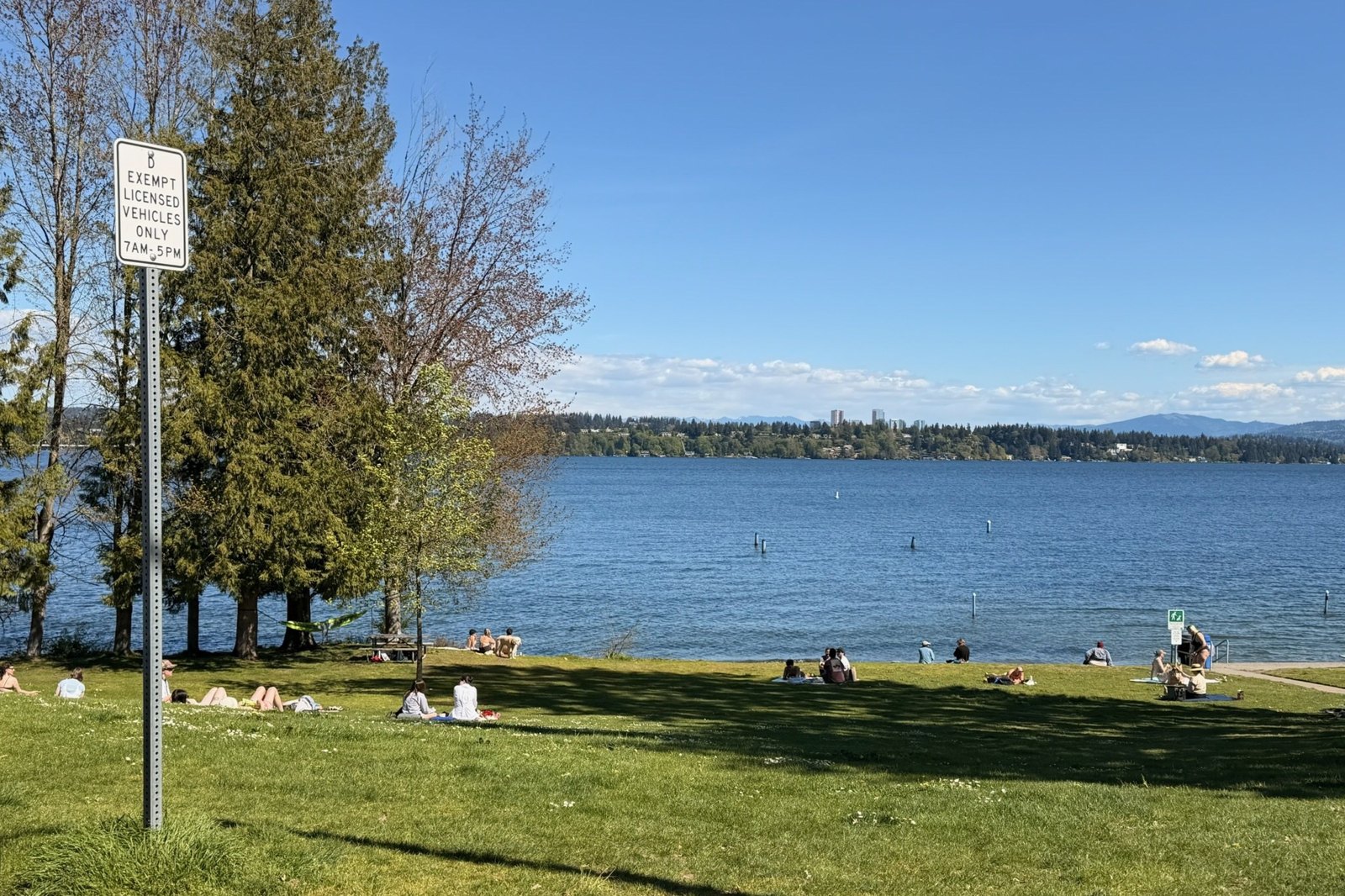
Microsoft employees relocating to the Redmond campus can live in Seattle neighborhoods like Ballard, Wallingford, and West Seattle, all historically served by the Microsoft Connector bus, while accessing the city's urban amenities. King County's 2026 market shows more inventory and some price softening, giving incoming buyers more options than in recent years.
Where should Microsoft Redmond employees live in the Seattle area?
Microsoft employees relocating to the Redmond campus have two broad options: buy or rent on the Eastside (Redmond, Bellevue, Kirkland) for a shorter drive to campus, or settle into a Seattle neighborhood and rely on the Microsoft Connector bus or SR-520 to get there. The right answer depends on how much you value urban walkability versus commute simplicity, and in 2026, a more balanced King County market gives you more room to make that choice on your own terms.
Key Takeaways
- The Microsoft Connector bus has historically served Seattle neighborhoods including Ballard, Wallingford, and West Seattle, making a Seattle address a realistic option for campus employees who want city living without driving to Redmond. Routes change, so confirm current coverage with Microsoft before you commit to a neighborhood.
- King County's median sale price was approximately $896,000 over the three months ending July 2026, up 1.9% year over year, according to Redfin's King County market trends.
- Eastside active listings jumped roughly 43% year over year in April 2026 and prices dipped about 3.78%, per Axios Seattle, more options near campus than in recent years.
- Seattle's median listing price was around $750,000 in August 2026, with homes selling near asking price in a median of 44 days, according to Realtor.com's Seattle market page.
- Renting first is a legitimate strategy for relocating employees. Seattle's median rent ran about $2,500 per month in late summer 2026, down roughly 6.7% year over year, giving you time to learn the city before committing to a purchase.
How does the Seattle-to-Redmond commute actually work?
The commute question is the first thing I address with every Microsoft employee I work with, because it shapes every other decision. Seattle sits on the west side of Lake Washington; Redmond is on the east. That lake crossing is the defining constraint of this relocation.
The Microsoft Connector: the commute option most employees don't fully understand
The Microsoft Connector is the company's private commuter bus network, and it changes the calculus for living in Seattle. The program was built to serve neighborhoods where public transit to Redmond is otherwise slow and indirect, historically including West Seattle, Ballard, and Wallingford. You board near your home, work on the bus, and arrive at campus without touching SR-520 traffic yourself.
That's not a small thing. Car commutes from Seattle to Redmond typically use the SR-520 bridge across Lake Washington, and that corridor is toll-based and heavily variable by time of day. The Connector turns a potentially stressful crossing into usable time.
One important caveat, and I'd rather say it plainly than let you plan around an assumption: Connector routes and stop locations change over time, and Microsoft adjusts the network based on where employees actually live. Before you sign a lease or write an offer on the strength of Connector access, confirm current routes through Microsoft's internal transportation resources. If a route serving your target neighborhood has been discontinued, your commute math changes completely.
What about driving or King County Metro?
If you're in a neighborhood without Connector coverage, your options are driving SR-520 (or I-90, depending on your starting point) or piecing together King County Metro bus routes to a park-and-ride. Neither is as convenient as the Connector, and both depend heavily on where exactly you land in the city. This is one reason I always map out commute options before we start touring homes, the specific block matters as much as the neighborhood name.
Seattle neighborhoods that work for Redmond employees
Here's how I think about the Seattle side of this decision. The neighborhoods below each have distinct characters and different price points. None of them are identical, and the right fit depends on what you're actually looking for in a home base.
Ballard
Ballard is a historically maritime district in northwest Seattle that has evolved into one of the city's densest, most walkable neighborhoods. Breweries, restaurants, weekend farmers markets, and a mix of craftsman houses and mid-rise condos define the streetscape. Recent local market data shows a median sale price of $899,000 in Ballard, with homes sitting on market a median of 57 days, a meaningful shift from the frenetic pace of a few years ago. With Connector service, it's a strong candidate if you want genuine urban texture and a predictable campus commute.
Wallingford
Wallingford sits north of Lake Union and has a quieter, more residential feel than Ballard, craftsman bungalows, a compact commercial strip on 45th Street, and easy access to Green Lake. It's the kind of neighborhood where people stay for decades. Connector coverage makes the Redmond commute workable, and the price point tends to sit in a range that gives first-time buyers more to work with than some of Seattle's higher-profile neighborhoods.
West Seattle
West Seattle is a peninsula neighborhood with a genuinely distinct identity, the Junction area has its own commercial core, Alki Beach provides waterfront access, and the overall feel is more neighborhood than urban district. Car commutes to Redmond from West Seattle are the most complex of these three options (you're crossing both the West Seattle Bridge and then SR-520), which is exactly why Connector coverage here is significant. If the city-within-a-city feel appeals to you, the Connector makes it viable.
Capitol Hill and beyond
Capitol Hill, the Central District, and Columbia City each have strong neighborhood identities and active real estate markets. They don't all have direct Connector service, so commute planning matters more here. Recent area-level market data shows Capitol Hill's median sale price at $870,000 with a 48-day median on market, the Central District at $792,000 with a 48-day median, and Columbia City at $724,950 with a 55-day median. These are area-level figures, individual homes vary by condition, street, and build year, but they give you a realistic baseline for budgeting.
The table below shows current area-level market snapshots across several Seattle neighborhoods I work in regularly. Use it as a starting point, not a ceiling or floor for any specific home.
| Area | Median Sale Price | Median Days on Market |
|---|---|---|
| Ballard | $899,000 | 57 |
| Beacon Hill | $770,000 | 52 |
| Belltown | $484,999 | 41 |
| Capitol Hill | $870,000 | 48 |
| Central District | $792,000 | 48 |
| Columbia City | $724,950 | 55 |
| Denny Triangle | $650,000 | 41 |
| Downtown Seattle | $747,625 | 51 |
Source: Recent aggregated public listing data, trailing approximately 90 days as of August 2026. Area-level medians, individual home values vary by condition, street, build year, and timing. All information should be independently reviewed and verified for accuracy.
Should you buy in Seattle or on the Eastside, and should you rent first?
This is the question I get most often from incoming Microsoft employees, and there's no universal answer. Here's how I frame it.
The Eastside case (Redmond, Bellevue, Kirkland)
Living closer to campus means a shorter, simpler commute, local arterials and SR-520 rather than a cross-city journey. The 2026 market has also made the Eastside more accessible than it's been in years. According to Axios Seattle, citing S&P CoreLogic Case-Shiller and RE/MAX data, Eastside active listings rose roughly 43% year over year in April 2026 and prices declined about 3.78%, more inventory and less competition than the peak years. Bellevue's downtown core and Kirkland's waterfront offer genuine urban amenities, though the overall character is different from Seattle's neighborhoods.
For employees with families or anyone who simply wants the shortest path between home and desk, the Eastside case is straightforward. The price softening means your budget goes further right now than it would have in 2023 or 2024.
The Seattle case
If the urban texture of Seattle is part of why you accepted the offer, the food scene, the walkability, the neighborhoods with actual street life, then the Eastside can feel like a trade-off you didn't want to make. I'd rather tell a relocating client honestly that the Eastside won't give them what they're looking for than sell them on a place they'll regret. The Connector exists precisely because Microsoft recognized that a lot of employees want to live in Seattle and needed a viable way to get to campus.
Renting first is a legitimate move
If you're arriving without deep knowledge of Seattle's neighborhoods, renting for six to twelve months before buying is a sound strategy. You'll learn which commute corridor actually fits your schedule, which neighborhoods match your daily life, and whether you want to be in the city or on the Eastside before you commit to a purchase. Realtor.com's August 2026 Seattle market data puts the median rent around $2,500 per month, down about 6.7% year over year. The rental market is softer than it's been, which works in a renter's favor.
Your specific situation, timeline, budget, whether you're relocating with a partner or family, and how long you expect to be in the Seattle area, should drive this decision. That's exactly the kind of thing I walk through in an initial consultation before we ever look at a single listing.
FAQ
Where should I live if I work at Microsoft Redmond but want the Seattle city experience?
Ballard, Wallingford, and West Seattle are the strongest starting points, since all three have historically had Microsoft Connector bus service, meaning you're not dependent on driving SR-520 every day. Each has a distinct character: Ballard is dense and walkable with a strong food and nightlife scene, Wallingford is quieter and residential, and West Seattle has a peninsula neighborhood feel with waterfront access. Confirm current Connector routes before committing, and let your commute logistics and lifestyle priorities guide which one fits.
Is it better to buy on the Eastside or in Seattle neighborhoods like Capitol Hill or Wallingford?
It depends on what you're optimizing for. The Eastside (Redmond, Bellevue, Kirkland) gives you a shorter, simpler commute to campus, and 2026's inventory increase and modest price softening have made it more accessible than in recent years. Seattle neighborhoods offer more urban character, walkability, and neighborhood texture, but the commute requires more planning. There's no objectively right answer; the decision comes down to how much the commute variable matters relative to where you actually want to spend your time outside of work.
What is the Seattle and King County housing market like heading into fall 2026?
The market has shifted toward more balance compared to the frenzy of 2021 and 2022. Over the three months ending July 2026, King County's median sale price was approximately $896,000, up 1.9% year over year, according to Redfin. At the Seattle city level, Realtor.com's August 2026 snapshot shows a median listing price around $750,000 with homes selling near asking price in a median of 44 days. More inventory means more options and more room to negotiate than buyers had a few years ago.
Does Microsoft offer Connector bus routes from Seattle neighborhoods, and which areas are covered?
The Microsoft Connector has historically served neighborhoods including West Seattle, Ballard, and Wallingford, where direct public transit to Redmond would otherwise be slow and indirect. Coverage and routes change, so confirm current stop locations with Microsoft's internal transportation resources once you have an offer in hand. I'd treat Connector access as something to verify rather than assume, because a discontinued route changes your commute math entirely.
Should I rent first in Seattle or buy right away on the Eastside when I relocate to Microsoft?
Renting first is a genuinely good strategy if you're arriving without firsthand knowledge of the region. It gives you time to test commute routes, learn which neighborhoods fit your daily life, and make a purchase decision with real information rather than educated guesses from 2,000 miles away. Seattle's rental market has softened in 2026, with median rents down about 6.7% year over year, so the holding cost of renting while you search is lower than it's been recently. If your timeline or company relocation package pushes toward buying immediately, that's workable too, but don't let urgency push you into a neighborhood you haven't actually experienced.
Ready to map out your options before you arrive? Schedule a relocation consultation and I'll walk you through neighborhoods, commute corridors, and current market conditions specific to your situation.
About Kim Reidy
Kim Reidy is a Senior Broker and Director of Relocation at Pointe3 Real Estate in Seattle who has been helping corporate transferees and individuals find the right neighborhood since 2010. A Certified Negotiation Expert (CNE) and Certified Buyer Agent Expert (CBAE), she's known as Seattle's "neighborhood whisperer."
Pointe3 Real Estate · (206) 237-6391
Equal Housing Opportunity. Kim Reidy is licensed in Washington State, regulated by the Washington State Department of Licensing. This article is general information only and is not legal, tax, or financial advice; verify your specific numbers with your escrow officer, tax advisor, or lender. Employer shuttle routes and coverage are subject to change and should be confirmed directly with Microsoft. Property search powered by RealScout pulling live MLS data; all information should be independently reviewed and verified for accuracy.