Amazon's South Lake Union campus anchors most tech workers' neighborhood search in Seattle, but the right fit depends on whether you prioritize a walk-to-work commute, urban density, or flexibility if your role shifts to Bellevue. Belltown, Capitol Hill, and Queen Anne each offer distinct trade-offs worth knowing before you sign a lease or make an offer.
Which Seattle neighborhoods make the most sense for Amazon and tech workers?
The answer depends on where your office is and how you want to live. South Lake Union is the obvious starting point, Amazon has anchored the neighborhood for over a decade and the walkability is excellent, but Belltown, Capitol Hill, Queen Anne, and even Beacon Hill all offer real commute access with meaningfully different price points and daily lifestyles. The right neighborhood isn't just about distance to the office; it's about what you want the rest of your day to look like.
Key Takeaways
- Amazon has operated in South Lake Union for over ten years and continues to list Seattle as a core hub for software development, product, and operations roles.
- As of early 2025, nearly 50,000 Amazon staff resumed five-days-a-week office attendance in Seattle, making commute proximity a practical housing factor, not just a preference.
- Belltown carries the lowest median sale price among the neighborhoods closest to South Lake Union, at $484,999, with a median of 41 days on market as of August 2026.
- Amazon's stated plans to bring 25,000 jobs to Bellevue intensify the Seattle-vs-Eastside housing question for tech workers whose roles could shift campuses.
- Tech employment in the Seattle metro declined 2.3% from Q1 2024 to Q1 2025, and Amazon cut roughly 2,300 Seattle-area positions in late 2025, context that makes resale potential and lifestyle value as important as commute minutes when choosing where to buy.
How does Amazon's South Lake Union footprint shape the neighborhood search?
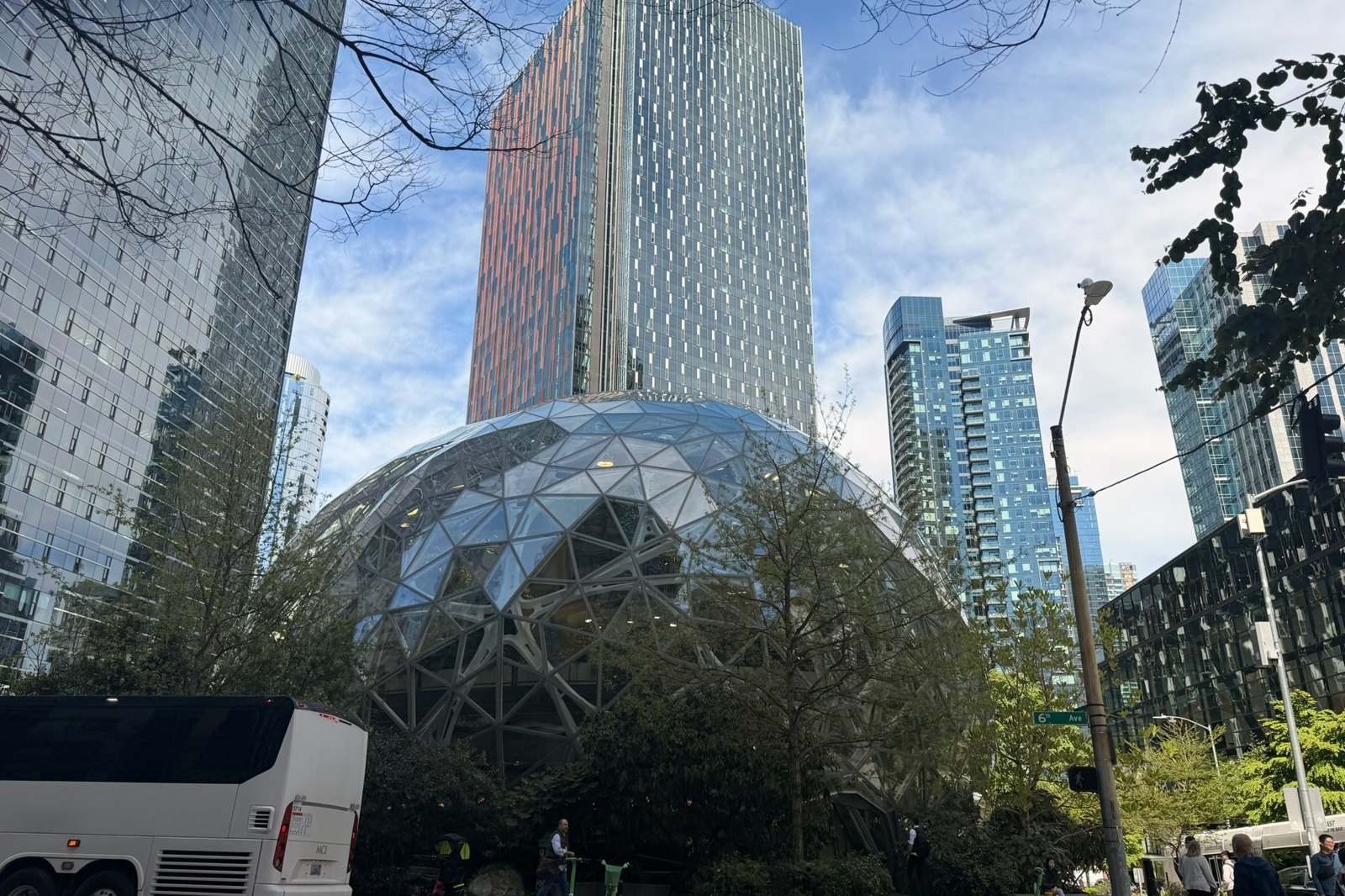
South Lake Union is not an accident. Amazon moved into South Lake Union more than ten years ago and the neighborhood rebuilt itself around that anchor, new apartment towers, a dense restaurant and bar scene, Lake Union Park on the waterfront, and transit options that make car-free living genuinely workable. Neighborhood guides rate South Lake Union's walkability and public transit as excellent, with over 100 restaurants and substantial fitness and shopping options within walking distance.
That concentration matters because of Amazon's return-to-office posture. In January 2025, Axios reported that nearly 50,000 Amazon staff resumed five-days-a-week office attendance in Seattle under an expanded in-person policy. That's not a number you ignore when you're deciding how far from the office you're willing to live. A 40-minute commute that felt manageable at two days a week becomes a real quality-of-life issue at five.
That said, the tech employment picture has shifted. A May 2025 Washington Policy Center analysis using Washington Employment Security Department data found that tech employment in the Seattle metro declined 2.3% from Q1 2024 to Q1 2025. And in October 2025, Axios reported Amazon reduced its Seattle-area workforce by approximately 2,300 positions in one week. These are 2024 and 2025 figures, not a description of conditions today, but they're worth sitting with if you're buying rather than renting. The question I encourage every tech-worker client to ask is: if my role changes or moves, does this neighborhood still make sense?
The City of Seattle's April 2026 Economic and Revenue Forecast still treats tech as a key contributor to payroll employment, but emphasizes diversified growth rather than uninterrupted tech expansion. Amazon remains an anchor. It's just no longer the only variable in the equation.
The Bellevue factor
Amazon's HQ1 materials indicate more than 11,000 employees currently work in Bellevue, with plans to bring 25,000 jobs there in the coming years. If there's any chance your role is or becomes Bellevue-based, the Seattle-side neighborhood calculus changes significantly. Living in South Lake Union and commuting to Bellevue across SR-520 or I-90 is a different experience than walking to the SLU campus. I'll come back to this in the FAQ, but it's worth flagging early: know which campus you're actually going to before you sign anything.
Which neighborhoods should tech workers actually consider?
Here's how I walk clients through the options. The table below shows market data for neighborhoods within reach of the South Lake Union tech corridor, so you can see where the price points actually land.
| Area | Median Sale Price | Median Days on Market |
|---|---|---|
| Ballard | $899,000 | 57 |
| Beacon Hill | $770,000 | 52 |
| Belltown | $484,999 | 41 |
| Capitol Hill | $870,000 | 48 |
| Central District | $792,000 | 48 |
| Columbia City | $724,950 | 55 |
| Denny Triangle | $650,000 | 41 |
| Downtown Seattle | $747,625 | 51 |
Source: Recent aggregated public listing data, trailing approximately 90 days as of August 2026. Area-level medians, an individual home's value varies by condition, street, build year, and timing.
South Lake Union and Denny Triangle
Living here means your commute is measured in minutes on foot. Streetcars and buses connect South Lake Union to downtown and surrounding neighborhoods, and the neighborhood's density means most daily errands happen without a car. The trade-off is that you're living in what is essentially an urban campus, high-rises, new construction, and a social scene oriented toward people who work nearby. If that's your lifestyle, it's genuinely excellent. If you want more neighborhood character, you might find it feels thin.
Denny Triangle sits at a median of $650,000 with a 41-day market pace, a meaningful step down from Downtown Seattle's $747,625 median, and still within easy walking or biking distance of the Amazon campus.
Belltown
Belltown is the closest thing to a price-accessible entry point among the neighborhoods immediately adjacent to South Lake Union. At a $484,999 median and 41 days on market, it moves quickly and offers real density, condos, walkability, and immediate access to both SLU and downtown. It's louder and grittier than some clients expect, but for a tech worker who wants to be close to the office without paying Downtown prices, it's worth a serious look.
Capitol Hill
Capitol Hill is the neighborhood I hear about most from tech workers who want urban energy but don't want to feel like they live inside a corporate campus. At an $870,000 median and 48 days on market, it's not cheap, but the mix of housing types, the density of independent restaurants and bars, and the relatively easy commute to SLU (walkable for many, short bus or bike ride for others) make it a consistent favorite. In my experience, Capitol Hill buyers are often people who've thought carefully about where they want to spend their non-work hours, not just where they want to sleep near the office.
Ballard, Beacon Hill, and Columbia City
These neighborhoods require a real commute, bus, bike, or car, to South Lake Union. What they offer in return is more house for the money, more neighborhood texture, and better resale flexibility if your employer situation changes. Beacon Hill at $770,000 and Columbia City at $724,950 both connect to downtown via Link light rail, which makes the commute more predictable than driving. Ballard at $899,000 is further from the tech corridor but has its own strong demand drivers and a housing stock that tends to hold value well.
For tech workers who are buying rather than renting, I'd rather have an honest conversation about resale potential and lifestyle fit than sell you on proximity to a single employer's campus. Washington State Employment Security Department reporting points to a tech labor market that's diversified and occasionally volatile. A neighborhood that works for your life, not just your current commute, is a better long-term bet.
Frequently Asked Questions
Which Seattle neighborhoods give the shortest commute to Amazon's South Lake Union offices?
South Lake Union itself, Denny Triangle, Belltown, and parts of Capitol Hill are all within walking or biking distance of Amazon's SLU campus. South Lake Union sits roughly 1.7 miles from downtown Seattle, and most nearby neighborhoods can reach the campus in under 20 minutes on foot, by bike, or via streetcar. Queen Anne and First Hill add a short bus or bike leg but remain practical for a five-day commute.
How has Amazon's return-to-office policy changed housing demand near South Lake Union?
When Amazon's five-day return-to-office policy took effect in January 2025, approximately 50,000 Seattle-area staff resumed daily in-person work, which renewed demand for neighborhoods within a short commute of SLU. That shift made commute time a harder constraint for buyers and renters who had previously tolerated longer distances. That in-person expectation remains in place, which is why proximity to the SLU corridor continues to be a meaningful factor in neighborhood pricing.
If I work in Bellevue or Redmond, does it make sense to live in South Lake Union?
It depends on how often you're actually in Bellevue versus Seattle. Amazon has stated plans to grow its Bellevue presence to 25,000 jobs, and commuting from South Lake Union to Bellevue across SR-520 or I-90 adds meaningful time and variability to your day. If your role is Bellevue-primary, you'll want to weigh whether a Seattle lifestyle is worth a longer cross-lake commute, or whether living on the Eastside makes more practical sense. I work through exactly this calculation with relocating clients regularly, because getting it wrong is an expensive mistake.
How do recent Amazon layoffs and tech job shifts affect where Seattle tech workers should buy?
The late-2025 Amazon cuts of roughly 2,300 Seattle-area positions, combined with a broader 2.3% decline in Seattle metro tech employment from Q1 2024 to Q1 2025, are a useful reminder that buying primarily for proximity to one employer carries risk. That doesn't mean you shouldn't buy near SLU, it means the neighborhoods with the strongest independent demand (Capitol Hill, Ballard, Beacon Hill) tend to be more resilient if your employment situation changes. When I'm working with a tech-worker buyer, resale flexibility and lifestyle value are part of the conversation from day one.
What should I know about the purchase process when buying a condo near Amazon's campus in Seattle?
In Washington State, your purchase will be handled through an escrow company or the escrow division of a title company. The escrow officer manages the neutral third-party administration of funds and documents through closing, coordinating your earnest money, loan documents, and the deed recording. For condo purchases specifically, you'll also want to review the HOA financials and building reserve study carefully. In a high-rise neighborhood, the building's financial health matters as much as the unit itself.
The bottom line for Seattle tech workers
Amazon's presence in South Lake Union is real, durable, and still a legitimate anchor for neighborhood decisions, but the right neighborhood depends on your office location, your lifestyle priorities, and how much flexibility you want to build into a purchase. The price and pace data above gives you a starting point; the neighborhood fit conversation is where the real work happens.
I've been helping tech workers and corporate transferees find the right Seattle neighborhood since 2010, and the question I get most often isn't "where's closest to Amazon," it's "where will I actually be glad I bought in five years?" Those are different questions, and I'm glad to work through both with you.
About Kim Reidy
Kim Reidy is a Senior Broker and Director of Relocation at Pointe3 Real Estate in Seattle who has been helping corporate transferees and individuals find the right neighborhood since 2010. A Certified Negotiation Expert (CNE) and Certified Buyer Agent Expert (CBAE), she's known as Seattle's "neighborhood whisperer."
Pointe3 Real Estate · (206) 237-6391
Equal Housing Opportunity. Kim Reidy is licensed in Washington State, regulated by the Washington State Department of Licensing. This article is general information only and is not legal, tax, or financial advice; confirm your own numbers and transaction details with your escrow officer, tax advisor, or lender. Employment figures cited are from 2024 and 2025 reporting and may not reflect current conditions. Property search powered by RealScout pulling live MLS data; all information should be independently reviewed and verified for accuracy.