Garden Style vs. Mid Rise vs. High Rise: Understanding Seattle's Apartment and Condo Building Types
By Kim Reidy | Senior Broker & Director of Relocation, Pointe3 Real Estate
When you're searching for an apartment or condo in Seattle, you'll quickly notice that buildings come in very different shapes and sizes.
[INSERT YOUTUBE VIDEO LINK HERE]
A garden style community and a high rise tower are both listed as apartments, but the living experience is completely different. Understanding the three main building types before you start touring saves time and helps you focus on what actually fits your life.
All three styles exist in both rental and condo form. Whether you're renting or buying, the building type shapes your daily experience in ways that go well beyond square footage.
Garden Style
Garden style communities are low-rise buildings, typically two to three stories, with open-air hallways. You walk up to your front door from outside rather than through an interior corridor. These buildings have a more residential, neighborhood feel than mid rise or high rise buildings and tend to attract people who want something quieter and more intimate than a larger complex.
One feature that comes up regularly with renters who aren't quite ready to commit to a house: many garden style communities have ground floor apartments that open directly onto a common grassy area. It's not a private yard, but it gives you the feel of one: a patch of grass outside your door, room for a chair, somewhere to let a dog out. For renters making the transition from a house or townhome, this can be a meaningful quality of life detail.
Garden style buildings are wood frame construction. There are no elevators, so if stairs are a concern, this style isn't the right fit. Parking is not attached to the building. Most communities offer a mix of uncovered reserved spaces, carports, and occasionally garages for an additional monthly fee.
In Seattle's rental market, garden style communities tend to offer lower price points than comparable mid rise or high rise units. The tradeoff is fewer amenities and less of the modern, full-service feel of newer buildings.
Garden style is a strong fit for: Renters who want a quieter, more residential feel. People transitioning from a house who want outdoor space. Pet owners who like a ground floor option. Anyone who prefers a smaller, more intimate community over a large building.
Mid Rise
Mid rise buildings run up to about eight stories. Most are wood frame construction, though some are concrete and steel. Entry is controlled access: you're buzzing in or using a key fob rather than walking straight to your door from outside. Hallways are enclosed. Elevators are standard.
The attached parking garage is one of the most appreciated features of mid rise buildings. The elevator comes directly to your floor from the garage, which means you're never carrying groceries through an open parking lot in the rain. Most mid rise buildings also have trash and recycling chutes on each floor, which is a small quality of life detail that renters notice once they've had it.
Mid rise buildings are the most common building type in Seattle's core neighborhoods and represent the broadest range of finishes, amenities, and price points. You'll find mid rise buildings across Capitol Hill, Queen Anne, Ballard, South Lake Union, Fremont, and most other walkable neighborhoods. They typically have more amenities than garden style communities: fitness centers, rooftop decks, bike storage, and package rooms, without the premium pricing of a high rise.
Mid rise is a strong fit for: Most renters and buyers looking for a balance of convenience, amenities, and price. People who want controlled access and covered parking. Anyone who wants a range of neighborhood options across the city.
High Rise
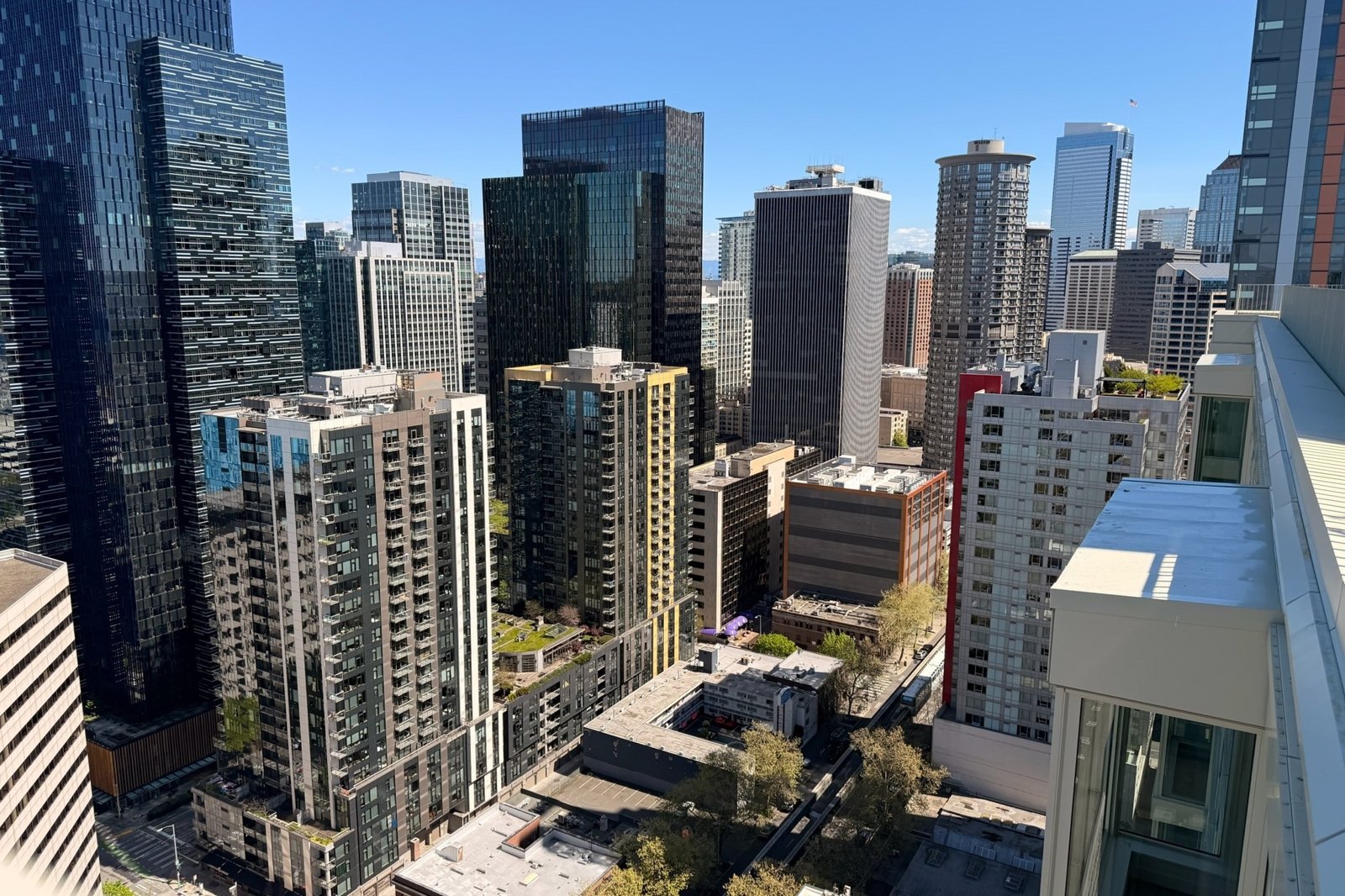
High rise buildings are Seattle's towers. Steel and concrete construction, full elevator service, onsite parking, and a level of amenity that mid rise and garden style buildings generally don't match. Rooftop spaces in Seattle's high rises can be spectacular, and AC is standard in most buildings, less common in older mid rise and garden style stock.
One thing that's specific to Seattle: most neighborhoods have building height ordinances that limit how tall structures can go. The restrictions are partly about seaplane flight paths around Lake Union and partly about preserving the scale and character of established neighborhoods. The result is that high rises are concentrated in a handful of areas: Belltown, Downtown, Denny Triangle, a few towers at the South Lake Union border with Denny Triangle, pockets in First Hill, and some towers in the University District. If you want a high rise, those are your neighborhoods.
The views from Seattle's high rises can be exceptional: city skyline, Elliott Bay, the Olympic Mountains, Mount Rainier on a clear day. The amenity packages tend to be the most comprehensive of the three building types, and the steel and concrete construction means better sound insulation between units than wood frame buildings.
High rises carry the premium price point in Seattle's market, both for rentals and condos for purchase.
High rise is a strong fit for: Buyers and renters who want views, premium amenities, and a full-service building experience. People who want AC as a given. Anyone drawn to the energy of Downtown, Belltown, or Denny Triangle.
A Quick Comparison
| Garden Style | Mid Rise | High Rise | |
|---|---|---|---|
| Construction | Wood frame | Wood frame, occasionally concrete and steel | Concrete and steel |
| Stories | 2-3 | Up to 8 | 9+ |
| Hallways | Open air, exterior | Enclosed, controlled access | Enclosed, full concierge or controlled access |
| Elevator | No | Yes | Full service |
| Parking | Uncovered reserved, carports, occasional garages (extra fee) | Attached garage, elevator access | Onsite |
| AC | Less common | Varies by building | Standard |
| Neighborhoods | Throughout Seattle | Throughout Seattle's walkable core | Belltown, Downtown, Denny Triangle, South Lake Union border, First Hill, University District |
| Price point | Generally most affordable | Mid range, widest variety | Premium |
| Best for | Quiet, residential feel; ground floor outdoor access; smaller community | Balance of convenience and price; broadest neighborhood selection | Views, full amenities, AC, city center living |
Which One Is Right for You?
The building type that fits best depends on how you live, what you value, and where you want to be in the city. If you're not sure, touring one of each style before you commit to a neighborhood gives you a much clearer picture than reading about them.
That's something I help clients do regularly. If you want someone to walk you through the options and narrow it down before you spend a weekend touring, reach out at KimReidy.com.
About Kim Reidy
Kim Reidy is a Senior Broker and Director of Relocation at Pointe3 Real Estate in Seattle who has been helping corporate transferees and individuals find the right neighborhood since 2010. A Certified Negotiation Expert (CNE) and Certified Buyer Agent Expert (CBAE), she's known as Seattle's "neighborhood whisperer."
Pointe3 Real Estate · (206) 237-6391
Equal Housing Opportunity. Kim Reidy is licensed in Washington State, regulated by the Washington State Department of Licensing. This article is general information only and is not legal, tax, or financial advice. Building features, amenities, and pricing vary by property and change over time; verify current details independently. Property search powered by RealScout pulling live MLS data; all information should be independently reviewed and verified for accuracy. Data provided for personal non-commercial use only.