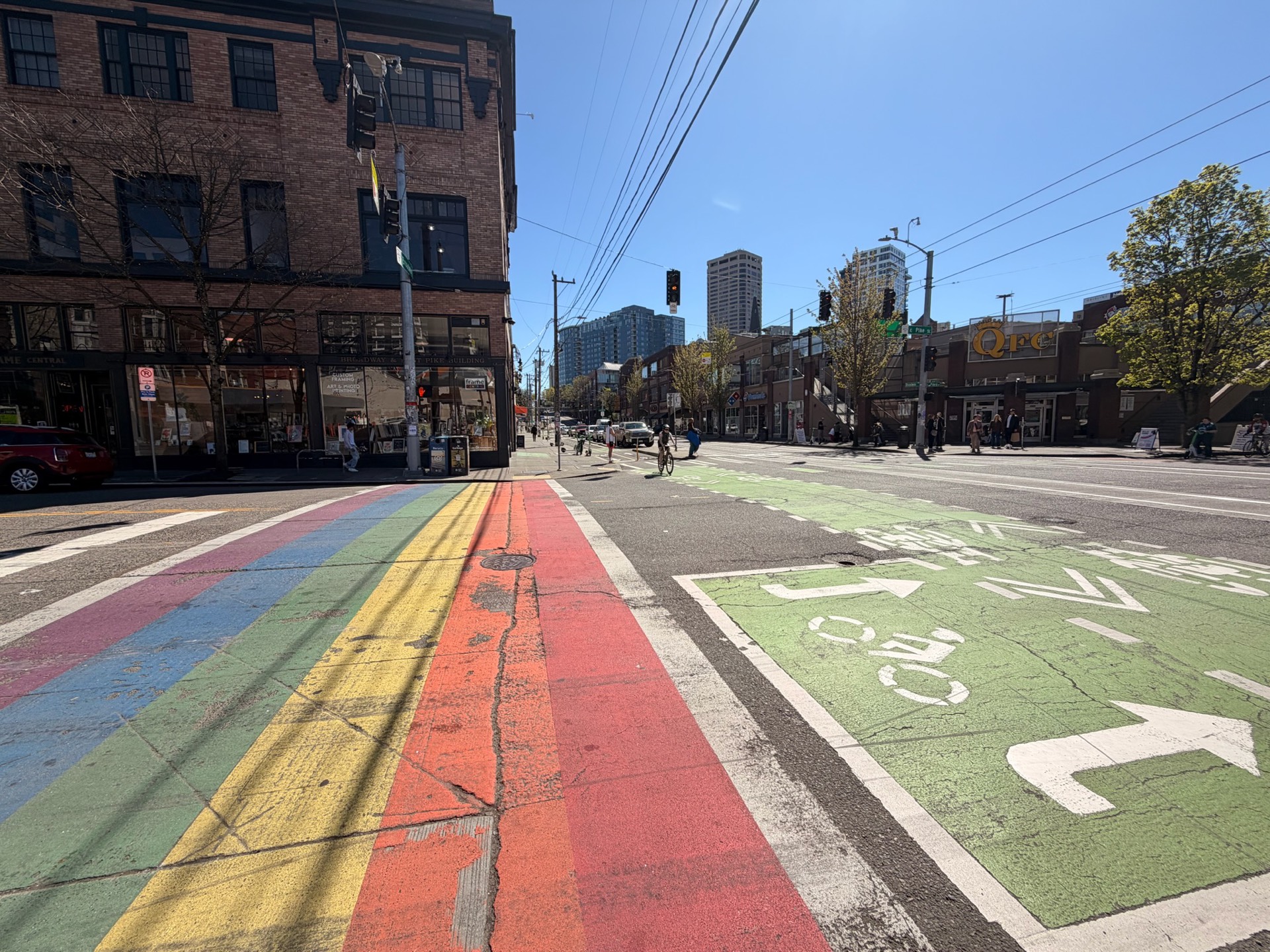
Capitol Hill is one of Seattle's most walkable neighborhoods, with Walk Scores in the 92–98 range, Link light rail at Capitol Hill Station, the First Hill Streetcar, and multiple King County Metro routes, making it genuinely practical to live without a car for most daily needs.
Is Capitol Hill walkable enough to live without a car?
Yes. Capitol Hill consistently ranks among Seattle's most walkable neighborhoods, with Walk Scores in the 92–98 range across much of the area. Between Link light rail, the First Hill Streetcar, King County Metro bus routes, and a dense concentration of groceries, restaurants, and services within a few blocks of most addresses, going car-free here is less of a lifestyle experiment and more of a practical daily reality for a lot of residents.
What Makes Capitol Hill Work for Car-Free Living
I walk my clients through this question constantly, especially the ones relocating from cities where you simply can't function without a car. Capitol Hill is a different situation. The neighborhood is built at a density and a mix of uses that means most of what you need on a daily basis is within a 10–15 minute walk of wherever you live.
According to Walk Score's Capitol Hill page, updated June 2026, the neighborhood is one of Seattle's most walkable, with daily errands accomplishable entirely on foot. Specific Capitol Hill locations show Walk Scores in the 92–98 range, firmly in "Walker's Paradise" territory for much of the neighborhood.
That translates to real convenience. Grocery stores, pharmacies, coffee shops, hardware stores, and medical offices cluster along Broadway, Pike-Pine, and 15th Avenue East. You're not walking 20 minutes to find a carton of eggs. For a lot of Capitol Hill residents, the car question answers itself pretty quickly once they've lived there for a few weeks.
Link Light Rail: Your Fast Lane Out of the Neighborhood
The single biggest transit asset for car-free living in Capitol Hill is Capitol Hill Station, located near Broadway and Olive/John. Capitol Hill Station is a stop on Sound Transit's Link light rail system, connecting directly to downtown Seattle in roughly one or two stops, and extending north toward the University District and south toward South Seattle and the airport.
If you're commuting to Amazon's South Lake Union campus, the University of Washington, or Seattle-Tacoma International Airport, you're doing it on rail with no traffic. That's a meaningful quality-of-life difference compared to sitting on I-5 or hunting for parking.
First Hill Streetcar: The Downhill Connector
The First Hill Streetcar, operated by the Seattle Department of Transportation, runs from Capitol Hill through First Hill, Yesler Terrace, the Central Area, Chinatown-International District, and into Pioneer Square. For anyone working at one of the First Hill medical campuses, Swedish, Virginia Mason, or Harborview, this is a direct, no-transfer ride from the heart of Capitol Hill.
Service hours as of August 2026 run Monday through Friday from 5 a.m. to 10:30 p.m., Saturday from 6 a.m. to 10:30 p.m., and Sunday and holidays from 10 a.m. to 8 p.m., with frequencies generally in the 12–15 minute range. Stops at Broadway and Denny and Broadway and Pike-Pine put the streetcar within easy reach of most Capitol Hill addresses.
The streetcar also connects to Link light rail at Capitol Hill Station and at International District/Chinatown Station, as well as to Sounder commuter rail and Amtrak at King Street Station, so your regional connectivity without a car is genuinely strong.
King County Metro Bus Network
Beyond rail and streetcar, Capitol Hill is served by a dense network of King County Metro routes including RapidRide G on Madison, and routes 2, 3, 8, 9, 10, 11, and 12. Those routes connect Capitol Hill to downtown Seattle, Madison Valley, Madrona, Seattle Center, Mount Baker, Rainier Beach, and other destinations across the city. If your destination isn't directly on the Link or streetcar corridor, there's a good chance a Metro route gets you there without much of a transfer penalty.
What to Look for When Buying Car-Free in Capitol Hill
Here's where I think the neighborhood whisperer angle actually matters. Capitol Hill's walkability isn't perfectly uniform across every block, and the difference between a 93 Walk Score and a 98 Walk Score is real when you're living it every day.
When I'm working with a buyer who's committed to going car-free, I focus their search on proximity to a few specific anchors: Capitol Hill Station, a streetcar stop, and at least one full-service grocery store. Those three things within a 10-minute walk cover the vast majority of daily needs.
If you want to live car-free in Seattle, walkability and transit access should drive your property search more than the listing itself. A beautiful unit that's a 25-minute walk from the nearest Link station is a very different lifestyle than one that's four blocks away.
A few other things worth thinking through before you buy:
- Does the building include parking? In Capitol Hill, parking is genuinely difficult and expensive. That's actually a feature for car-free buyers, you may be able to negotiate away a parking space (and its cost) that you don't need.
- Bike storage: Capitol Hill has solid bikeability, and micro-mobility options like bike share add flexibility for trips that are slightly too far to walk. Secure bike storage in a building matters if cycling is part of your car-free toolkit.
- Building amenities vs. neighborhood amenities: In a denser neighborhood like Capitol Hill, you're often trading a large unit for access to everything outside your door. That trade works well if the transit and walkability are genuinely there, and in Capitol Hill, they are.
Recent Zillow market data shows Capitol Hill's median sale price at $870,000, with homes spending a median of 48 days on market and 131 active listings as of late August 2026. It's an active market with real inventory, and the car-free premium is real, buyers specifically targeting walkable, transit-rich locations in Capitol Hill are often competing for the same properties.
Capitol Hill's days-on-market figure runs shorter than most Seattle neighborhoods, which reflects how consistently high demand is for this neighborhood's walkability profile. The right property at the right block is the decision that matters most, and that's exactly the kind of analysis I run with every buyer I work with here.
Frequently Asked Questions
Can I get to downtown Seattle from Capitol Hill using only transit or bike?
Easily. Capitol Hill Station on Sound Transit's Link light rail puts you in downtown Seattle in one or two stops, with no transfers needed. The First Hill Streetcar also runs from Capitol Hill through to Pioneer Square and the International District. By bike, the downhill ride to downtown is straightforward, and bike share options add flexibility for one-way trips.
What are the main bus and light rail options in Capitol Hill?
Capitol Hill Station serves Sound Transit's Link light rail with connections north to the University District and south toward the airport. The First Hill Streetcar runs through the neighborhood with stops at Broadway and Denny and Broadway and Pike-Pine. King County Metro routes serving Capitol Hill include RapidRide G on Madison and routes 2, 3, 8, 9, 10, 11, and 12, covering a wide range of destinations across Seattle.
How far do I have to walk from most Capitol Hill addresses to groceries and everyday services?
For most of the neighborhood, not far at all. Walk Scores in the 92–98 range across Capitol Hill reflect a genuine density of grocery stores, pharmacies, restaurants, and services, particularly along Broadway, Pike-Pine, and 15th Avenue East. Walk Score's Capitol Hill data confirms that daily errands can be accomplished entirely on foot for most residents. The specific blocks closest to Broadway and the Pike-Pine corridor tend to score highest.
Is parking really that difficult in Capitol Hill, and does it make going car-free easier?
Parking in Capitol Hill is legitimately challenging and expensive, which is actually one of the practical arguments for going car-free there. Street parking is competitive, and building parking adds meaningful cost. For buyers committed to car-free living, that dynamic often works in their favor, a unit without a parking space may be priced lower, and the savings can offset the occasional car-share or rideshare expense.
What's the commute like from Capitol Hill to tech hubs or medical centers without driving?
It's one of the better car-free commute setups in Seattle. For South Lake Union tech campuses, Link light rail to Westlake Station and a short walk or bus connection covers it efficiently. For First Hill medical campuses, Swedish, Virginia Mason, Harborview, the First Hill Streetcar runs a direct route from Capitol Hill with no transfer needed. The University of Washington is a single Link stop north at U District Station.
If I buy a home in Capitol Hill and plan to live car-free, what should I prioritize in my search?
Focus on proximity to Capitol Hill Station, a streetcar stop, and at least one full-service grocery store within a 10-minute walk. Those three anchors cover the majority of daily needs for a car-free lifestyle. Beyond that, look at bike storage in the building, the specific Walk Score of the address (not just the neighborhood average), and whether the listing includes parking you'd be paying for but not using. A local agent who knows the specific blocks can help you filter fast.
The Bottom Line
Capitol Hill is the real deal for car-free living in Seattle. The transit infrastructure, the walkability scores, and the density of everyday amenities all point in the same direction. The question isn't really whether you can live without a car here, it's which specific address gives you the best version of that lifestyle.
That's where I come in. I've been helping buyers find the right block in Capitol Hill since 2010, and the difference between a great car-free address and a frustrating one often comes down to details you won't see in a listing. If you're thinking about buying in Capitol Hill and want to map your commute, your grocery run, and your transit options before you make an offer, let's talk.
About Kim Reidy
Kim Reidy is a Senior Broker and Director of Relocation at Pointe3 Real Estate in Seattle who has been helping corporate transferees and individuals find the right neighborhood since 2010. A Certified Negotiation Expert (CNE) and Certified Buyer Agent Expert (CBAE), she's known as Seattle's "neighborhood whisperer."
Pointe3 Real Estate · (206) 237-6391
Equal Housing Opportunity. Kim Reidy is licensed in Washington State (Washington State Department of Licensing). This article is general information only and is not legal, tax, or financial advice. Readers should independently verify all information and confirm their own numbers with their attorney, tax advisor, lender, or escrow/closing officer.