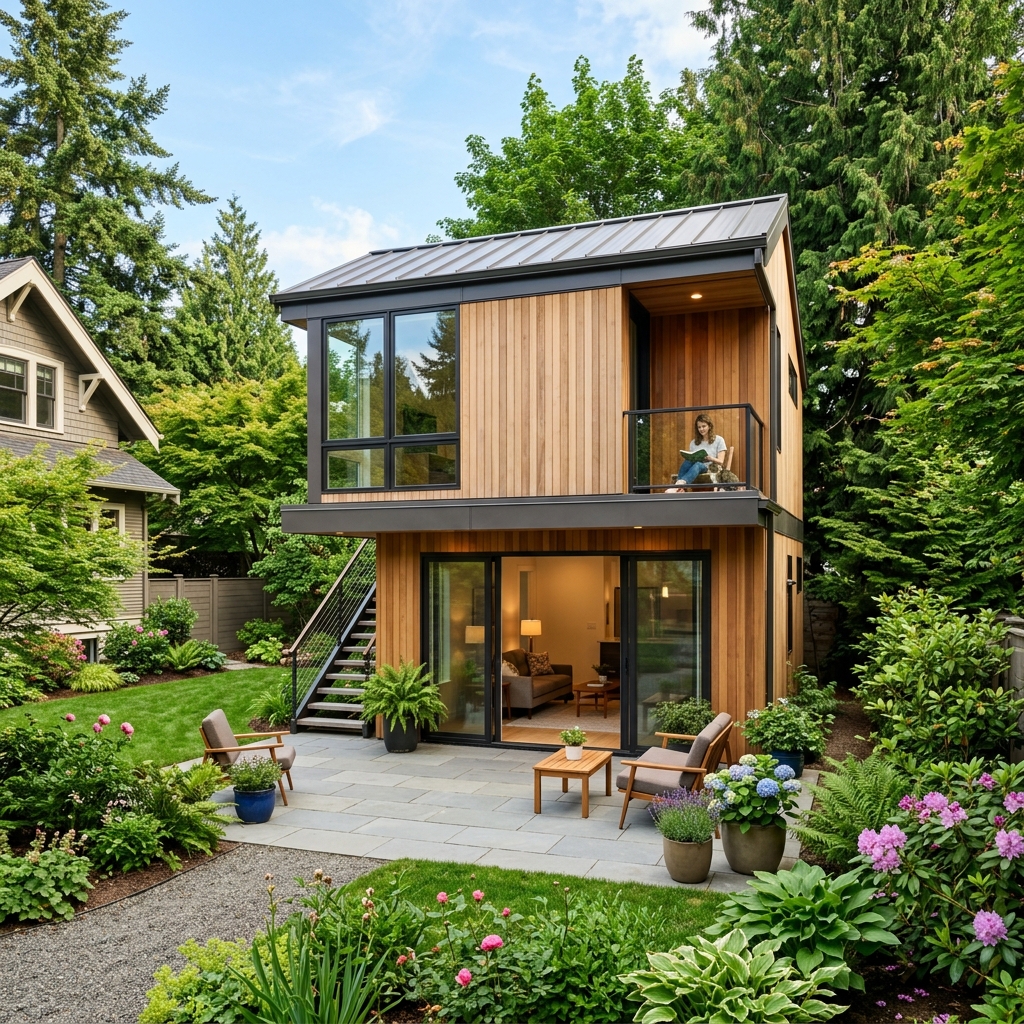
If you're buying a home in Seattle and the listing mentions a backyard cottage, a carriage house, a mother-in-law unit, or a DADU, pay attention. These structures represent one of the more interesting opportunities in Seattle's residential real estate market right now, and a lot of buyers walk past them without fully understanding what they're looking at.
I'm not a contractor or a zoning attorney, and this piece isn't a permitting guide. What I can offer is a buyer's perspective on why DADUs and ADUs matter, what to think about when you see one in a listing, and what questions to ask before you get too far down the road.
What's the Difference Between a DADU and an ADU?
These two terms come up together often and are easy to confuse.
A DADU (Detached Accessory Dwelling Unit) is a separate, standalone structure on the same lot as the primary home. Backyard cottages, carriage houses, and garden studios that have been converted into living spaces all fall into this category. It has its own entrance, its own walls, and its own sense of separation from the main house.
An ADU (Attached Accessory Dwelling Unit) is part of the main structure. A finished basement with its own entrance, a converted garage, or a self-contained unit built into the side of the house are all ADUs. Attached, but with its own living space.
Both can be rented out to generate income. The key distinction is physical separation. A DADU feels more like a standalone rental. An ADU feels more like a unit within the home.
Why This Matters for Seattle Buyers
Seattle loosened its DADU regulations significantly in recent years, making it easier for homeowners to build them and increasing the number of properties that have them. If you're buying a single family home in Seattle, there's a reasonable chance you'll come across listings with an existing DADU or ADU, or a lot that could support one.
The income potential is real. A well-maintained DADU in a desirable Seattle neighborhood can generate meaningful monthly rental income, which can offset your mortgage, cover property taxes, or simply give you more financial flexibility as a homeowner. For buyers stretching to get into Seattle's single family home market, that income stream can make a property work financially in a way it otherwise wouldn't.
Beyond income, a DADU adds flexibility. It can house a family member, serve as a home office, function as a guest space, or sit as a rental unit depending on your needs at any given time. That versatility is part of what makes properties with DADUs worth a closer look.
What to Think About as a Buyer
If you're considering a property with a DADU or ADU, here are the questions worth asking before you fall in love with the income potential:
Is it permitted? This is the most important question. An unpermitted DADU or ADU can create significant headaches: insurance complications, difficulty refinancing, and potential requirements to bring it up to code or remove it entirely. Always ask whether the structure was permitted and request documentation.
What is the current condition? A DADU that has been well maintained and recently updated is a very different proposition from one that needs significant work before it can be rented. Factor renovation costs into your thinking before you count on that income.
What are the utility arrangements? Some DADUs have separate utility meters, which makes billing straightforward for a rental. Others share utilities with the main house, which requires a different approach. Know what you're working with.
What does the rental market look like for this specific property? Location matters as much for a DADU as it does for any rental. A backyard cottage in Queen Anne or Fremont may rent very differently than one in a neighborhood with less rental demand.
If there's no DADU but the lot could support one, what's involved? This is where you need to talk to a contractor and potentially a permit specialist. I can help you understand what the property looks like from a real estate perspective, but the feasibility of building a new DADU involves zoning, lot size, setback requirements, and construction costs that are best evaluated by a licensed contractor and permit specialist working together.
A Word of Caution
The income potential of a DADU is real, but it's not guaranteed. Being a landlord comes with responsibilities: maintenance, tenant relationships, and navigating Washington's landlord-tenant laws. If you're buying a property specifically because of the DADU income, make sure you've thought through what it actually means to be a landlord in addition to a homeowner.
That said, for the right buyer, a property with a well-situated, permitted DADU is a genuinely compelling opportunity in Seattle's market. It's worth slowing down and looking carefully when you see one.
Want to Talk It Through?
If you're shopping for a Seattle home and want help evaluating a property with a DADU or ADU, that's a conversation I'm happy to have. I can help you think through the real estate side of the equation and point you toward the right experts for the permitting and construction questions.
Reach out at KimReidy.com.